Policy Briefs

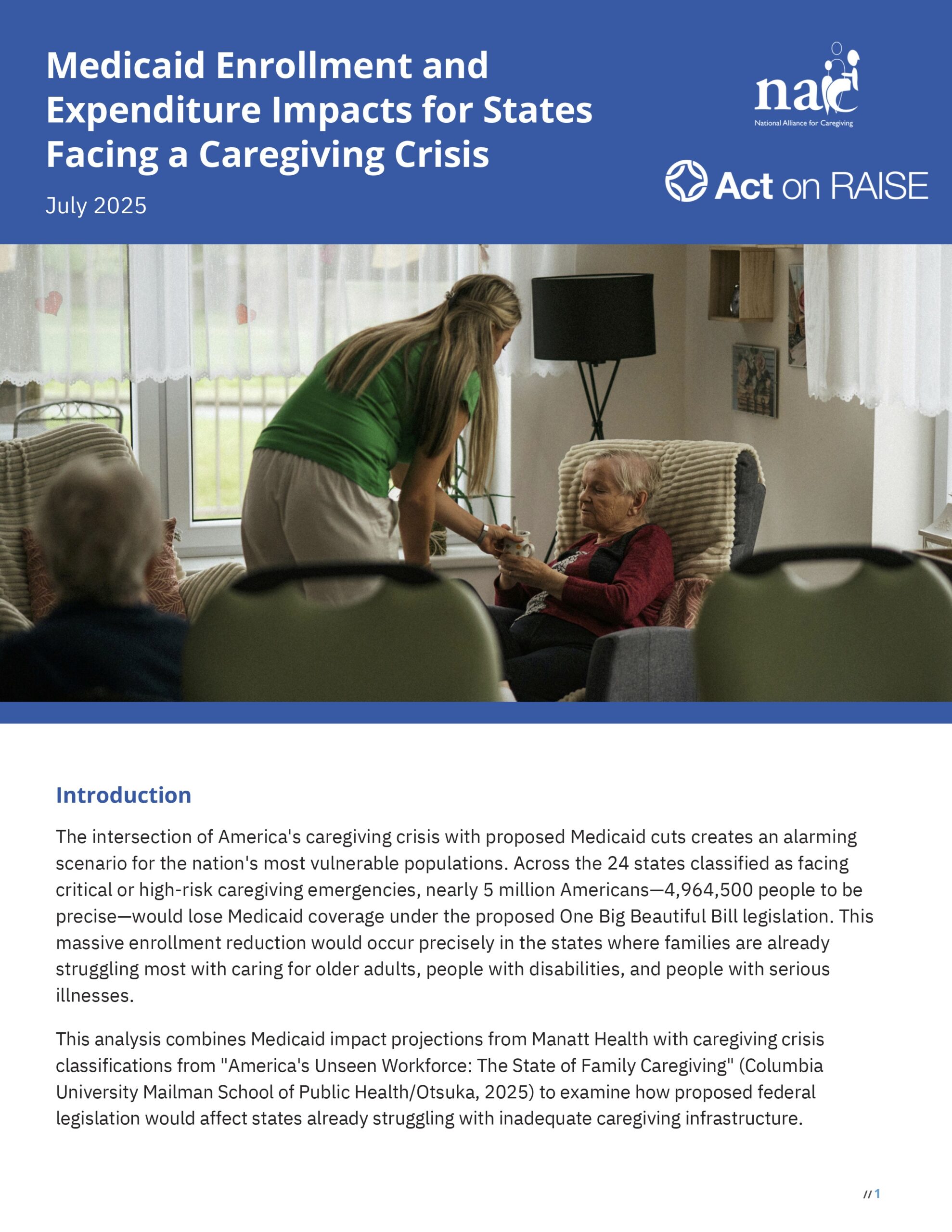
Medicaid Enrollment and Expenditure Impacts for States Facing a Caregiving Crisis
The intersection of America’s caregiving crisis with proposed Medicaid cuts created an alarming scenario. Across the 24 states classified as facing critical or high-risk caregiving emergencies, nearly 5 million Americans would lose Medicaid coverage under the proposed One Big Beautiful Bill. This analysis combines Medicaid impact projections for Manatt Health with caregiving crisis classifications from “America’s Unseen Workforce: The State of Family Caregiving” (Columbia University Mailman School of Public Health/Otsuka, 2025) to examine how proposed federal legislation would affect states already struggling with inadequate caregiving infrastructure.

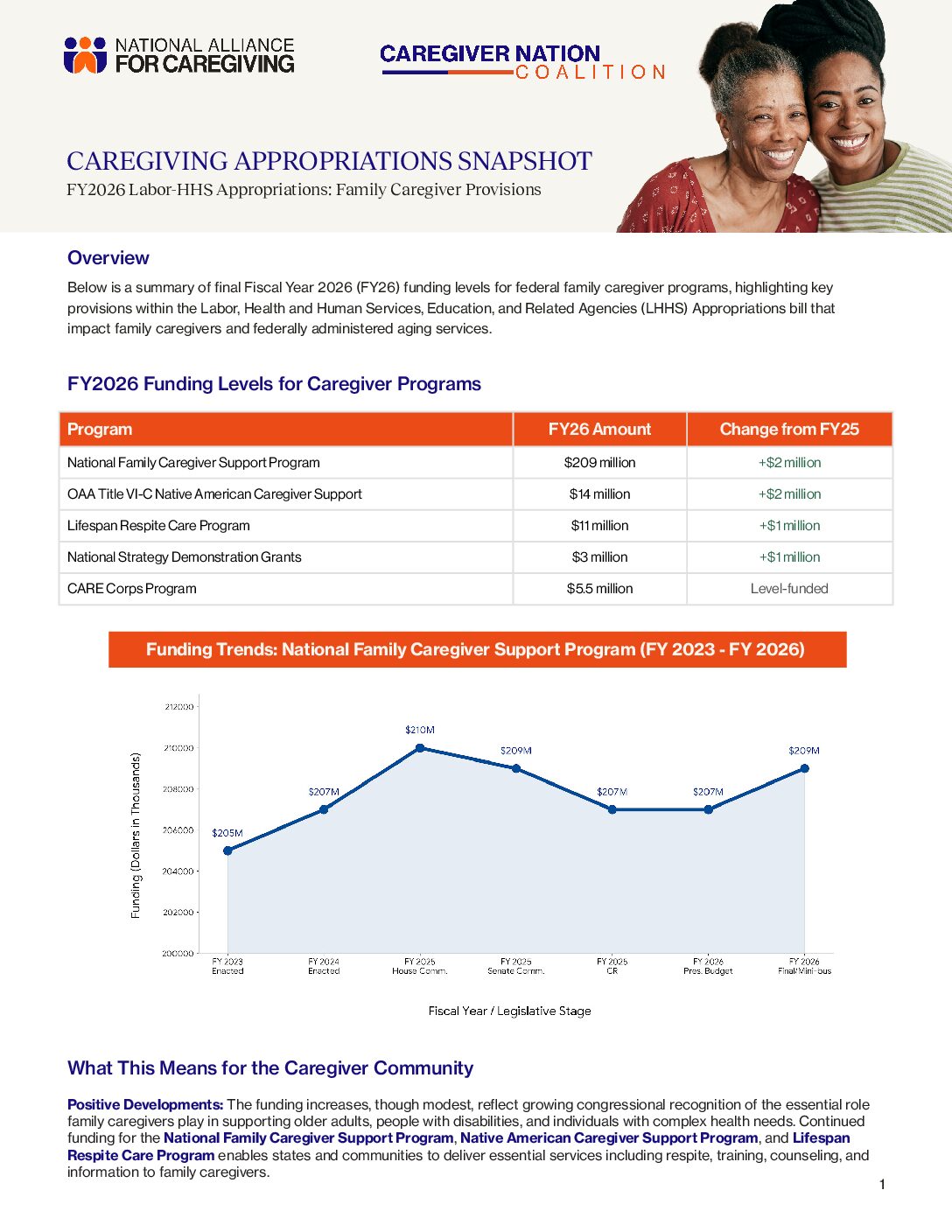
FY2026 Labor-HHS Appropriations: Family Caregiver Provisions
A summary of final Fiscal Year 2026 (FY26) funding levels for federal family caregiver programs, highlighting key
provisions within the Labor, Health and Human Services, Education, and Related Agencies (LHHS) Appropriations bill that
impact family caregivers and federally administered aging services.

Policy Brief: Strengthening the National Strategy to Support Family Caregivers: A Medicare Policy Framework
This policy brief explores a set of federal policy options aimed at enhancing Medicare’s support for family caregivers and ways to better recognize and support the essential role that family caregivers play in our healthcare system.

Aligned to Goal 2 of the National Strategy to Support Family Caregivers, which focuses on creating and implementing healthcare delivery frameworks that recognize, value, and integrate family caregivers, these policy options will also improve health outcomes for Medicare beneficiaries while addressing the significant financial, emotional, and physical pressures facing millions of family caregivers.

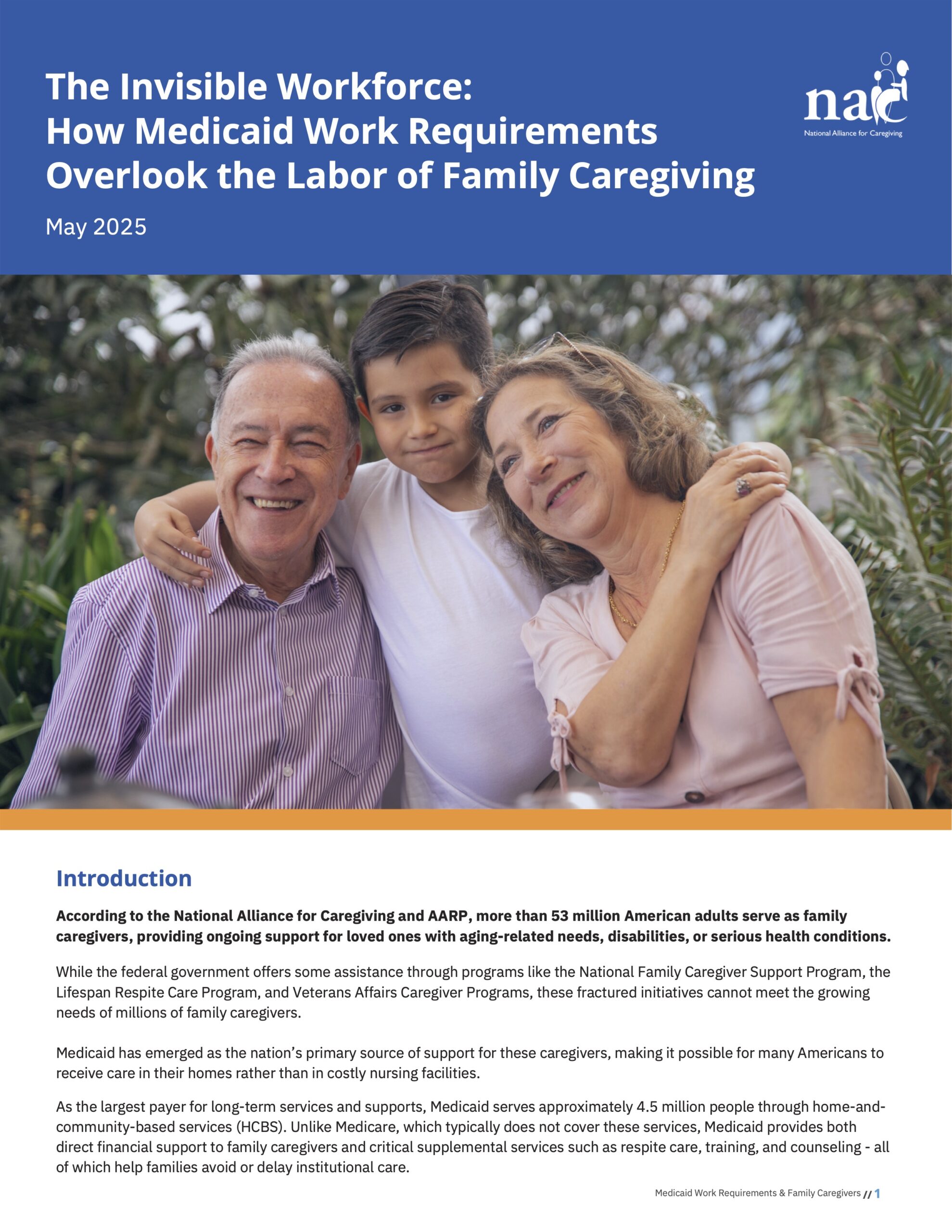
Policy Brief: How Medicaid Work Requirements Overlook the Labor of Family Caregiving
Family caregivers who qualify for Medicaid often face a challenging situation when balancing their caregiving responsibilities with work requirements. Data from 2023 shows that while approximately two-thirds of Medicaid enrollees between ages 19-64 maintained employment, nearly 30% were unable to work due to various reasons that traditionally qualified for exemptions under previous policies—including caregiving duties (12%), personal illness or disability, and school attendance.

Implementing work requirements for Medicaid eligibility can pose significant challenges for family caregivers enrolled in the program. Many caregivers reduce their work hours or leave employment to provide necessary care, making it challenging to comply with work requirements. This situation can jeopardize their access to health coverage, essential for maintaining their well-being and ability to provide care.

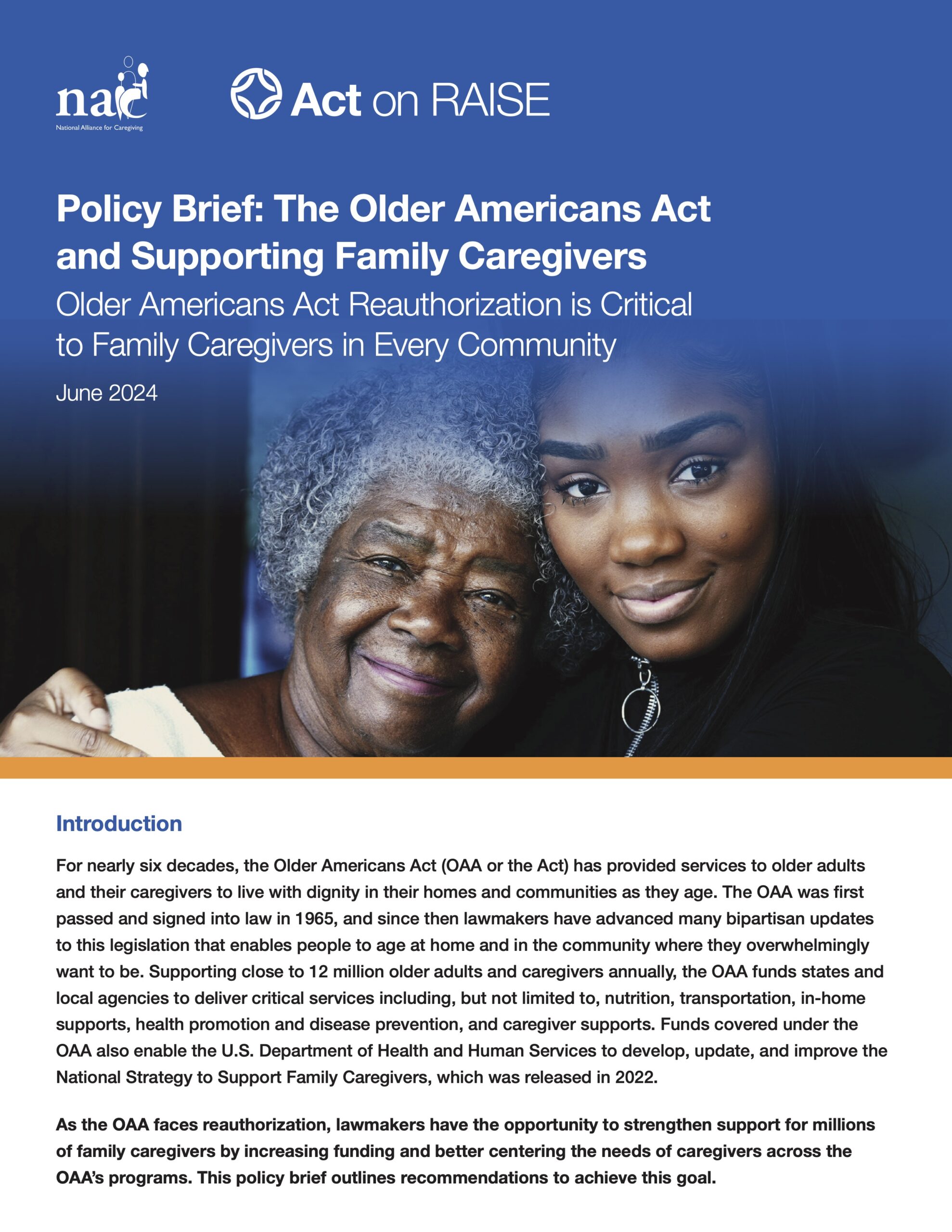
Policy Brief: The Older Americans Act and Supporting Family Caregivers Older Americans Act Reauthorization is Critical to Family Caregivers in Every Community
For nearly six decades, the Older Americans Act (OAA or the Act) has provided services to older adults and their caregivers to live with dignity in their homes and communities as they age. The OAA was first passed and signed into law in 1965, and since then lawmakers have advanced many bipartisan updates to this legislation that enables people to age at home and in the community where they overwhelmingly want to be. Supporting close to 12 million older adults and caregivers annually, the OAA funds states and local agencies to deliver critical services including, but not limited to, nutrition, transportation, in-home supports, health promotion and disease prevention, and caregiver supports. Funds covered under the OAA also enable the U.S. Department of Health and Human Services to develop, update, and improve the National Strategy to Support Family Caregivers, which was released in 2022.

Not Just Visitors: Integrating Family Caregivers In Care Delivery And Design
On behalf of C-TAC and the National Alliance for Caregiving, we are truly grateful to the Elea Institute for their generous grant, which makes this work possible and strengthens our mission to better serve caregivers and families.

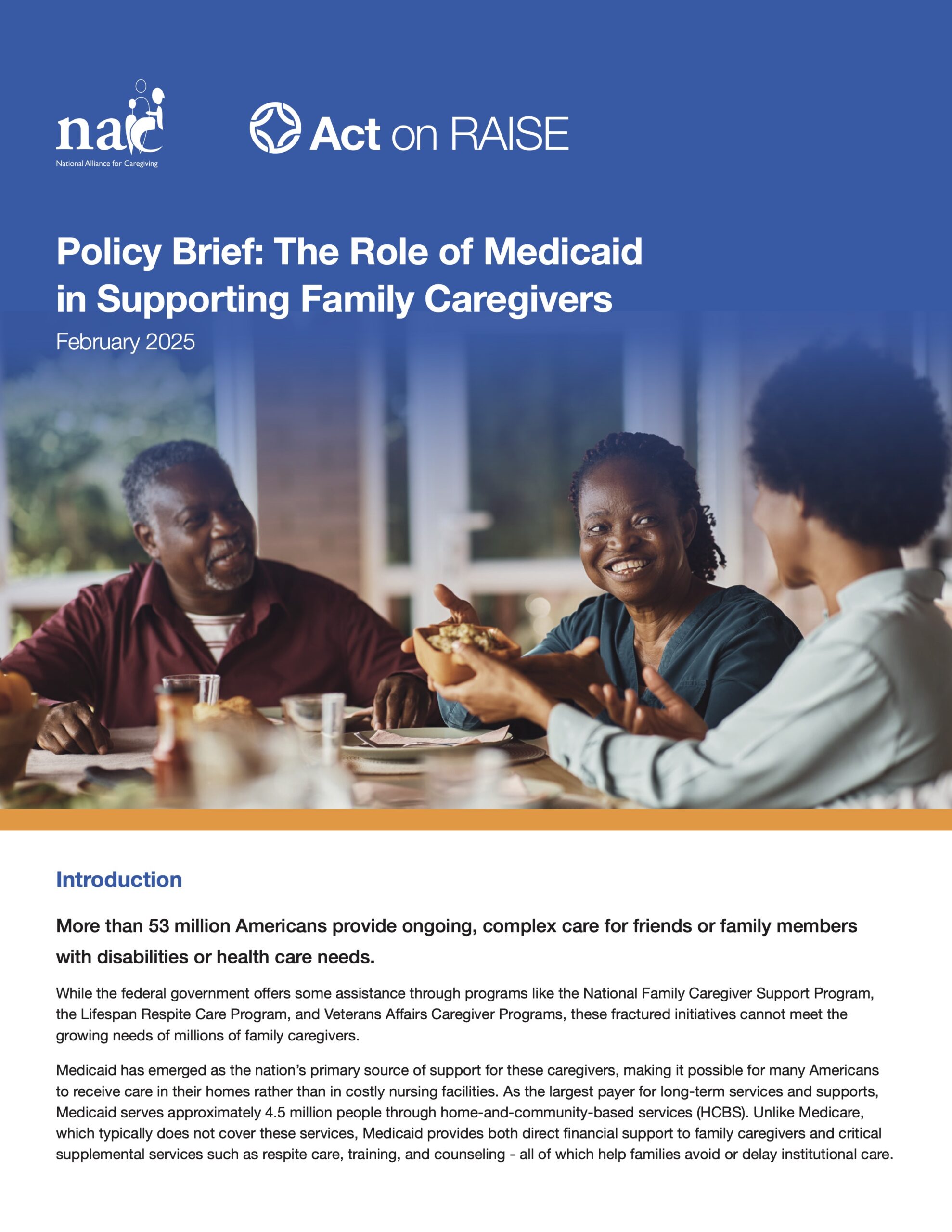
Policy Brief: The Role of Medicaid in Supporting Family Caregivers

While the federal government offers some assistance through programs like the National Family Caregiver Support Program, the Lifespan Respite Care Program, and Veterans Affairs Caregiver Programs, these fractured initiatives cannot meet the growing needs of millions of family caregivers.

Medicaid has emerged as the nation’s primary source of support for these caregivers, making it possible for many Americans to receive care in their homes rather than in costly nursing facilities. As the largest payer for long-term services and supports, Medicaid serves approximately 4.5 million people through home-and-community-based services (HCBS). Unlike Medicare, which typically does not cover these services, Medicaid provides both direct financial support to family caregivers and critical supplemental services such as respite care, training, and counseling – all of which help families avoid or delay institutional care.

Contact / Subscribe to Newsletter