Federal Cuts Threaten America’s Family Caregivers: Why We Must Act Now
Anita in Atlanta had to make an impossible choice. After building a career she loved, she took early retirement to care for her mother who has both dementia and cancer. Without access to respite services once provided through Medicaid, she now pays out of pocket and watches her savings dwindle.
“I am too young not to work, and I want to go back,” Anita told us. “But without support systems in place, I am nervous about what will happen to my mom and me.”
Anita’s story isn’t unique. Did you know that 8 million family caregivers rely on Medicaid for their own health coverage? According to our latest Caregiving in the US data, that’s the floor, not the ceiling. With HR 1 now law and massive Medicaid cuts forcing states to make devastating decisions, millions more families will soon face Anita’s impossible choice: leaving careers, draining savings, or risking their health to keep loved ones safe.
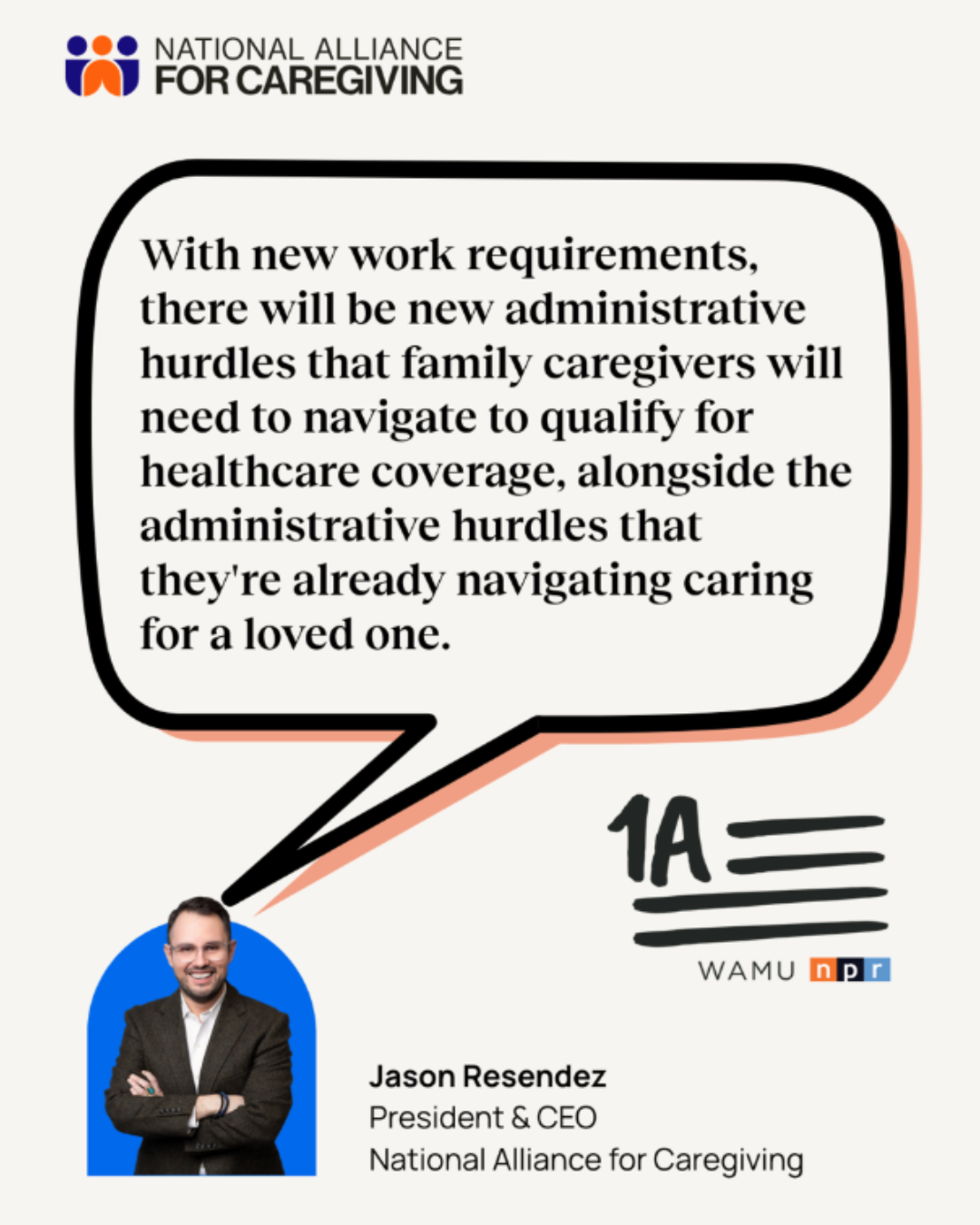 The stakes couldn’t be higher. Fifty-five percent of caregivers perform medical or nursing tasks like wound care, injections, or dialysis, yet only 22% receive any training. As states slash Medicaid-funded caregiver support services—the training programs, respite care, and home-based services that families depend on—this gap could widen dramatically, putting both caregivers and care recipients at risk.
That’s why we continue to call for fixes that will protect family caregivers. I recently joined NPR’s 1A alongside journalist Kat McGowan and caregiver Danilyn Rutherford to discuss these real-world consequences and the looming threat of new work requirements. Our message was clear: for millions of people, caregiving is incredibly hard—and it’s about to get even harder. Family caregiver programs are at serious risk of being sacrificed just when families need them most.
🎧 Listen to the full discussion here.
Beyond Medicaid: The Older Americans Act at a Crossroads
Medicaid isn’t the only lifeline at risk. As lawmakers debate the future of the Older Americans Act (OAA) reauthorization and other healthcare reforms, the outcome will directly affect millions of families. This is a critical moment that demands our voices at the table.
The OAA funds programs that are often the difference between stability and crisis—nutrition services, respite care, and the National Family Caregiver Support Program. These are exactly the resources that would help someone like Anita. As Congress debates reauthorization, strengthening caregiver provisions means expanding respite care availability, improving access to local training and support programs, and ensuring funding keeps pace with growing demand.
This is not the moment for cuts or complacency. It is the moment for investment.
Driving Impact Through State Action and Advocacy
We need champions who will fight to protect and expand programs that keep families like Anita’s stable. That’s why—during National Family Caregivers Month—we’re bringing together caregiving leaders from 10 states to strategize and mobilize through our Caregiver Nation Network. We’ll also launch new state-level caregiving data to help advocates and policymakers champion investments in care infrastructure.
How You Can Make an Impact
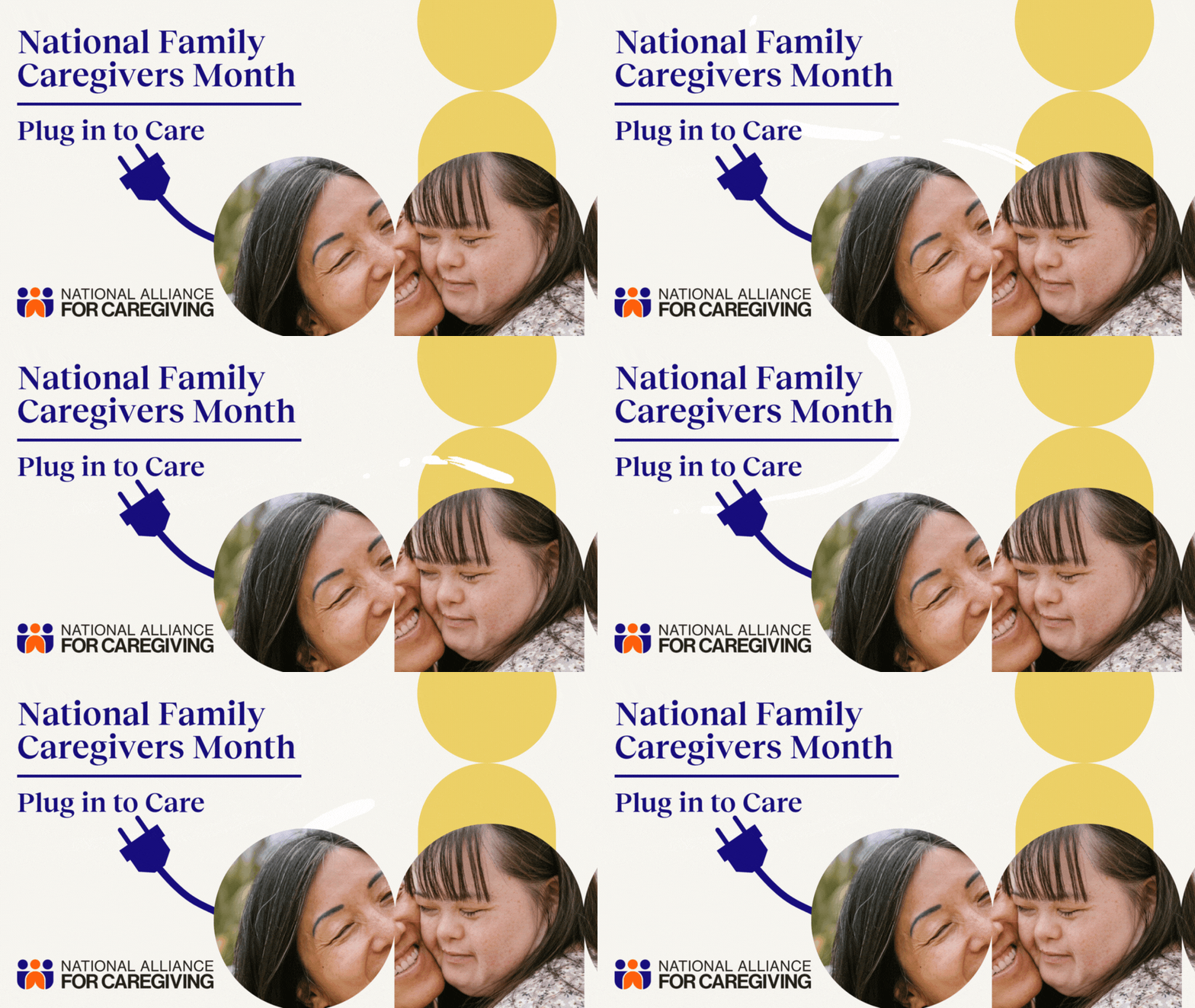
Family caregivers are speaking up. Congress needs to listen. Join the National Alliance for Caregiving during National Family Caregivers Month:
- Share your voice: Real experiences move policymakers. Add your story through NAC’s storytelling campaigns.
- Contact your representatives: Urge them to protect Medicaid and strengthen the OAA to support family caregivers.
- Join the movement: The upcoming Caregiver Nation Summit will amplify these issues and highlight solutions.
Family caregivers are the backbone of our families and communities. Now is the time to make our voices heard.