

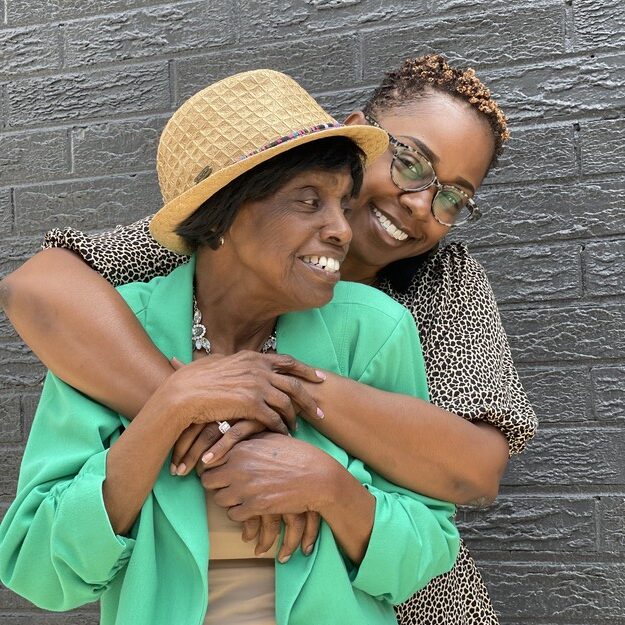
“If [Medicaid] cuts happen, that means, honestly, we would be homeless, and we wouldn’t have the resources we need, and my mom wouldn’t have care. It starts a cycle where I wouldn’t be able to work, and I wouldn’t have what I needed to be able to survive in this world.”
Ty is caring for her mother Gertrude, who is in the final stages of Alzheimer’s disease and is steadily declining. Ty began this care journey in DATE, shortly before her father passed away. Both Ty and Gertrude rely on Medicaid, (Medi-Cal in her home state of California) to help Gertrude live with Ty and her family in their home with proper support and care that helps ensure her safety.
Medi-Cal provides vital support to Ty through home and community-based services in two ways: supplement to help pay for direct care workers and stipends paid directly to family caregivers.
The direct care workers provided through Medi-Cal provide Ty flexibility in her caregiving day. As a sandwich caregiver and a part-time employee, having direct care support allows Ty time to work at her part-time job and time to homeschool her children. Without this support, balancing caregiving responsibilities with work and being a mom would be near impossible.
The stipend paid directly to family caregivers provides Ty’s family with a small source of additional income. This funding pays for the healthcare services needed to care for her mom at home. In addition, the stipend helps support necessities like food and electricity. Remaining at home allows Gerturde the opportunity to age in place and be present with the family.
Without Medi-Cal, Ty would be unable to afford to care for her mom in her home. Before making any cuts to Medicaid, Ty hopes policymakers will speak with family caregivers and hear their stories. Making these cuts would mean eliminating services for people who cannot care for themselves. Caregivers must be included in the conversation.