

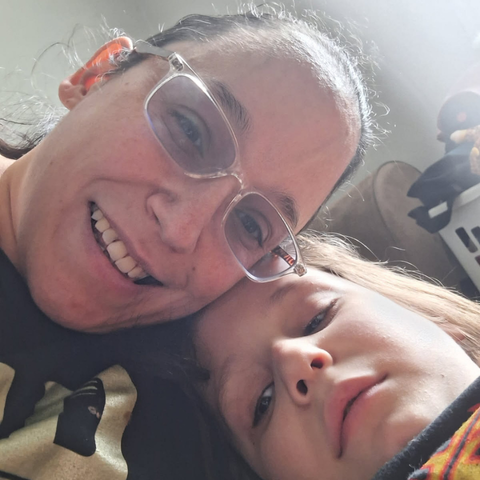
Jennifer’s caregiving journey began in 2011 with the birth of her second child. Her son, who had complications in utero, needed surgery in order to live, and now has a condition known as short bowel syndrome. Jennifer also has two daughters, both born after her son. One has been diagnosed with severe autism, and her youngest has developmental delays and is waiting for a diagnosis.
The family depends on Medicaid to survive. Jennifer’s son, who has a hard time absorbing nutrients due to his condition, needs a special food that costs $200 a week. Medicaid covers this cost. His necessary medications cost $4,000 a month and are also covered by Medicaid. Without this specialty food and medications, Jennifer’s son would die.
Currently, the family has signed up to receive the support of a direct care worker through Medicaid and are awaiting approval. Jennifer has her own health challenges that make it difficult to provide care at times, and she is eagerly awaiting the extra help. If Medicaid were to be cut, the family would lose out on a support that their future depends on.
Jennifer’s husband had to quit working to care for their children full-time fifteen years ago, and the family lost their home as a result. Currently, Maine is considering legislation that would allow caregivers to be paid through Medicaid – a form of self-direction. If he were provided a small but meaningful stipend through Medicaid, it would supplement some of their lost income.
For Jennifer and her family, support from Medicaid is a life-or-death situation. They received Medicaid because they can’t afford anything else – it’s not a privilege. If Medicaid were cut, Jennifer’s son would die, and her family would suffer.
“If you cut Medicaid, children will die. It’s not a matter of right versus privilege, it’s literally a matter of existence. If you cut Medicaid, children will die.”