

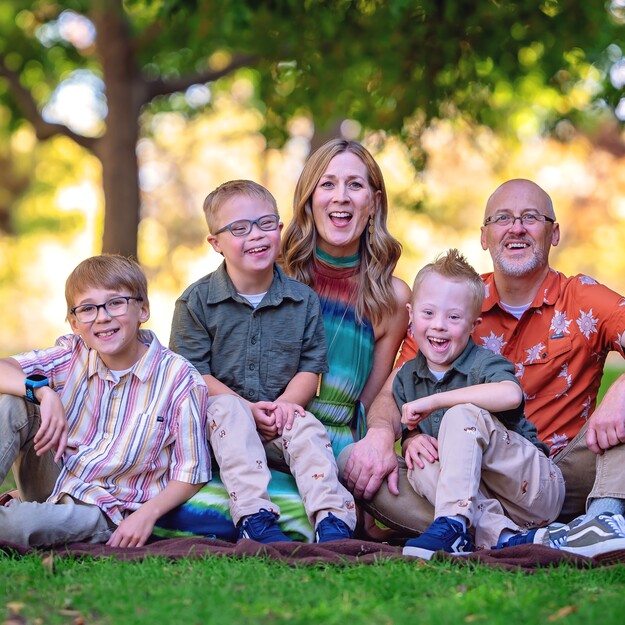
Julie is the mother of twin boys with Down syndrome. Medicaid home and community-based services have been a lifeline for her family, covering essential medical costs through the Katie Beckett waiver and offering critical supports like respite care and Community Services Workers (CSWs) through the Developmental Disabilities waiver. Family Personal Care Services provides Julie with an hourly wage for a set number of hours to provide care for her sons, support she wouldn’t otherwise receive, as her caregiving responsibilities prevent her from working outside the home.
One of the most impactful aspects of these Medicaid services is how they help her sons engage with the community and develop important social skills for greater independence. CSWs play a key role, supporting the boys during community activities like swim class or local parades, and assisting at home with daily routines such as getting dressed and eating.
Having children with significant disabilities requires Julie’s constant attention and teaching. Julie described respite services as “indispensable.” Medicaid-funded respite services give Julie the rare and much-needed chance to rest, recharge, or focus on herself, secure in the knowledge that her children are safe and well cared for.
The Family Personal Care Services Plan, launched in Idaho during the pandemic, has been especially valuable. It allows parents to be compensated for providing care to their eligible children. For Julie, this support eases financial strain and allows her to continue meeting her sons’ needs without outside help. Eliminating this program would place a serious burden on her family’s finances and well-being.
Medical expenses place a huge burden on Julie and her family. Without Medicaid, Julie would quickly reach burnout, and her sons would lose their opportunities for growth and interaction with the world. They would become isolated.
Programs like these are not just financial support—they are investments in the future of children with disabilities. Cutting them means taking away the tools that allow families to thrive. Not long ago, children with complex medical needs were institutionalized because families had no other option. We cannot go back. Stripping away these vital benefits harms the very people who need them most.
“It’s horrific that I could ever be put in a position to think the best place for my boys to be is a state-run institution and not in my home where I care for them day-to-day. That can never be the model again. We’ve done all this work, all this advocacy and legislation like Medicaid and ADA – the fact that it can be dismantled in such a short period of time is terrifying. It’s unacceptable to me to take even one step backwards.”