

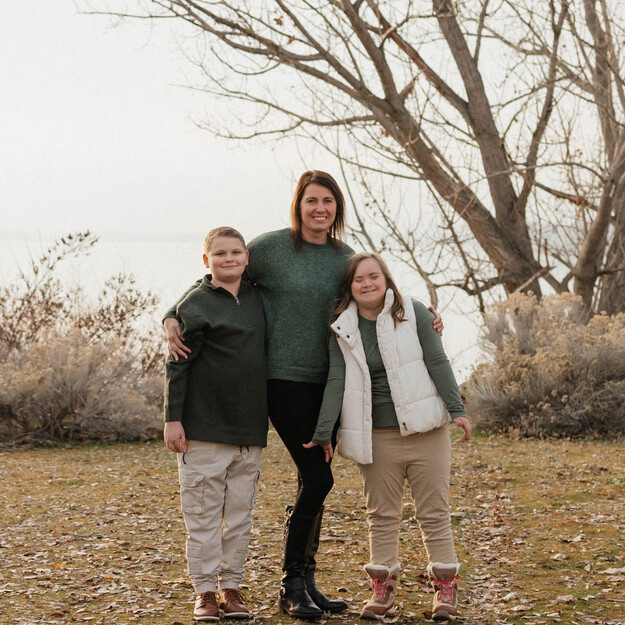
Shannon has two children with complex medical needs – a son and a daughter. Her daughter has Down Syndrome, a sensory processing disorder, hyperthyroidism, obstructive sleep apnea and a heart condition, while her son has been diagnosed with autism, anxiety, and ADHD. Medicaid, including support through the Katie Beckett waiver, allows Shannon to care for her children at home.
The home care services available to Shannon help her children with tasks of daily living, like showering and brushing their teeth. Medicaid also funds a behavioral specialist that can help with the kids at home or while in the community. The Katie Beckett waiver, which ignores income in order to meet the needs of the child, provides a budget for the family to use community support and respite workers. This respite allows Shannon to take a break for herself, and to care for her own mental and emotional well-being.
Shannon’s goal is to make her kids as independent as possible. Currently in Idaho because of a direct care worker shortage, parents can be contracted through an agency as home support workers for their children. Both Shannon and her boyfriend have leveraged this valuable program, though it is in danger of being cut. Her official work as a home support worker allows her to directly support her children, taking the time to teach them new things and foster that independence.
If Medicaid programs were cut, Shannon would need to find full time employment to support the medical and services needs of her children. However, even a full-time job would not cover the full costs without bankrupting her, and she feels eventually her children would end up in an institution to receive the services they need. By investing in this care at her children’s early development stage, Medicaid is giving them the tools they need to care for themselves. Without these services, they will likely need public assistance for the rest of their lives.
“Without early services in these essential years, where my children are learning – they’re just learning how to function in their own home, how to do their own laundry, how to cook for themselves, and without assistance to learn these skills they will likely be dependent on some form of public assistance for the rest of their lives.”
“Daily care tasks and laundry and food preparation, things like that and having help in the home, I think, is helping [my children] become more independent. And if we didn’t have those services, they could potentially have to be put in a home or an institution where they would receive those services…when I worked a full-time job I often got called to school, or someone is sick. I quit my full-time job to provide those personal care services.”