

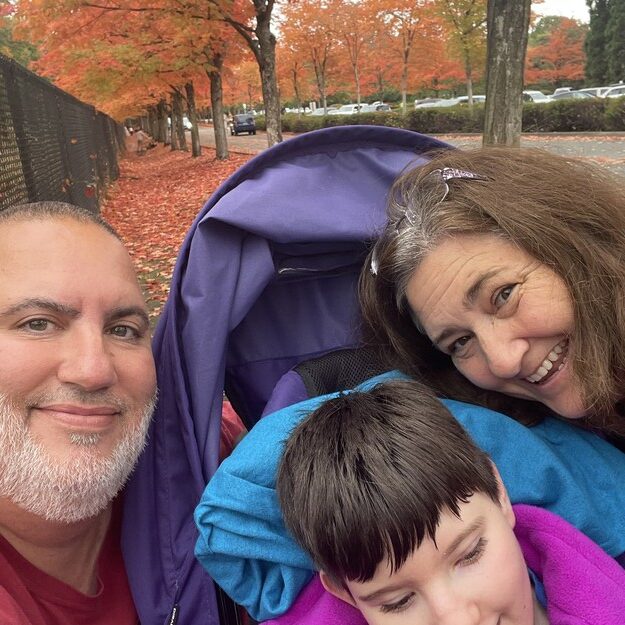
Trixy and her husband are devoted caregivers to their daughter, Harper, who lives with profound medical challenges. Diagnosed with periventricular leukomalacia (PVL), Harper developed cerebral palsy, spastic quadriplegia with dystonia, and severe vision impairment. As a result, she is nonverbal and cannot sit, stand, or walk independently.
Idaho’s Medicaid program runs vital services like Community Service Workers and respite care. The Family Personal Care Services (FPCS) program is a lifeline. It allowed Trixy’s husband to leave his job and become Harper’s full-time caregiver—while still bringing some money into support the family. Before FPCS, he frequently had to take unpaid Family Medical Leave to care for Harper, which led his employer to label him as unreliable and deny him promotions. Without FPCS, the family couldn’t have managed financially.
Idaho is now suspending its FPCS program, which means Trixy’s husband will be forced to return to work, but Harper still needs full-time care. The only option will be for him to find a night job, turning their lives into a constant cycle of exhaustion and separation —communicating only to coordinate Harper’s care.
Harper is eligible for nursing support through Medicaid, which the family will pursue once FPCS ends. But this process is uncertain and stressful. If Medicaid itself were to face cuts, the consequences for their family would be devastating. Without this critical support, they would face a cruel choice: institutionalize their daughter or become homeless trying to care for her at home. The emotional toll—constant stress, anxiety, and fear of failing Harper—would only deepen.
For Trixy’s family, Medicaid is the foundation keeping their family together and their daughter safe.
“Medicaid cuts would change the way we live together, and my daughter’s stability in her home. Our stability. I don’t want her in an institution, but I don’t know if it’s better to make her unstable or to keep her here without Medicaid support. I’d wonder if I was doing what’s best for her, and then it would go the route of depression – it would do a lot to our family.”