It’s not hard to see that we’re at a critical point for caregiving policy. Some policy watchers see opportunity ahead, particularly around a potential caregiver tax credit that organizations like National Alliance for Caregiving (NAC) and AARP have long championed. Yet this moment of possibility comes with significant risks. The new administration’s broader vision for reshaping federal government could upend our existing – and already strained – systems of care, particularly Medicaid.
Consider the stakes: Medicaid covered approximately two-thirds of home care costs in 2022, serving as a crucial safety net through its home- and community-based waiver programs (HCBS). Proposals circulating the capital suggest Medicaid spending cuts of up to $2.3 trillion over the next decade. Such reductions would ripple through the caregiving landscape, potentially restricting home care eligibility, reducing essential services, decreasing provider payments, and adding new burdens to family caregivers – including proposed work requirements that could strain already-stretched support systems.
The challenge extends beyond Medicaid. Without reauthorization of the Older Americans Act (OAA) in 2024, we risk undermining programs that have supported independent living for older adults and people with disabilities since 1965. The National Family Caregiver Support Program, a cornerstone of the OAA for more than 20 years, provides essential resources, respite care, and training to friends and family caregivers. As health policy analyst Howard Gleckman warns, “critical Older Americans Act programs are now in jeopardy. And so are the older adults who rely on them.” Adding to this pressure, a newly announced federal funding freeze on grants threatens to further strain these services, impacting NAC and thousands of other non-profit organizations (read our statement on the freeze below and here).
The stakes in our policy conversations about caregiving couldn’t be higher. This isn’t just about programs and budgets – it’s about how we value and support the very people who hold our communities together. For millions of American families, caring for an aging parent, a child with disabilities, or a spouse with a serious illness is their daily reality, not an abstract policy debate. In the coming months and years, we’ll face a crucial test of our commitment to both essential caregiving programs and our core belief that caring for one another is a shared responsibility.
In this edition of Care Notes, I’ll share how we’re thinking about the current landscape and our vision for the path forward.
Care Chart of the Month
Each month, I’ll highlight a data point or research insight that is shaping my thinking on the care landscape, from policy to practice. This month, I’m uplifting a report published by KFF which provides deeper insights into how the Medicaid program supports family caregivers. Drawing from data from a national survey of Medicaid officials in all 50 states and DC, the report offers key insights into Medicaid’s role in supporting home-based care for its beneficiaries and their family caregivers.
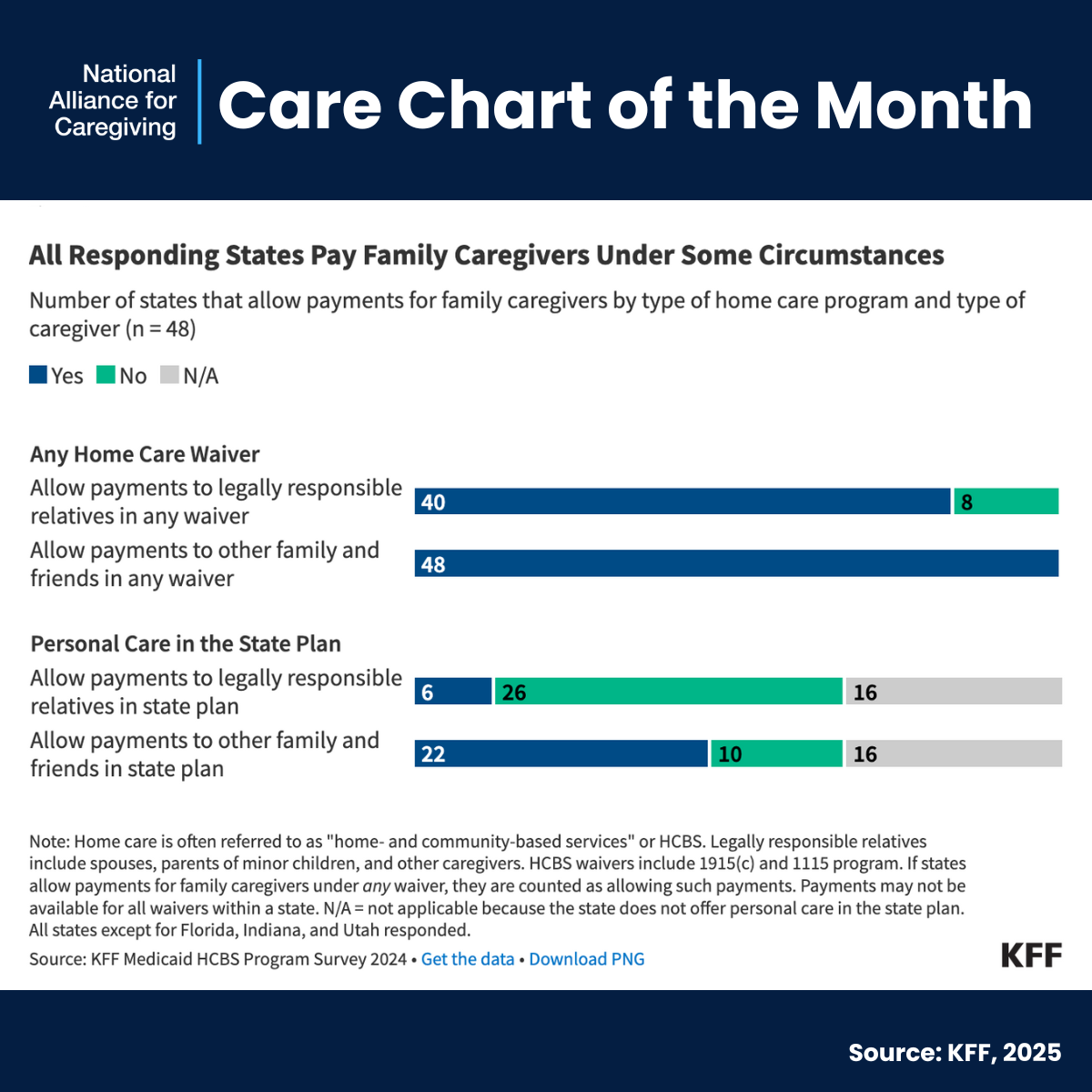
Key Insight: All responding states (48) pay family caregivers under some circumstances. Self-directed services and payments to family caregivers serve as a critical lifeline, particularly for families supporting adults with intellectual or developmental disabilities who face a fragmented care landscape after aging out of childhood support systems.
The report notes that the increasing reliance on family caregivers is due in no small part to the shortage of direct care workers. The report’s data supports the community consensus that we’re not doing enough to meet the growing demand for home-based care. NAC and many in our community continue to work on solutions to shortages in the care workforce, including our June 2024 Together in Care roadmap with PHI, supported by The John A. Hartford Foundation.
Federal Funding Pause Threatens Caregiver Services
A recently announced pause of federal grant funding could upend our nation’s aging and caregiving services network – a network already stretched to the brink. Millions of older adults and their family caregivers depend on Medicaid and Older Americans Act programs for essential support, from nutrition assistance to transportation and respite care. In fact, we’re already seeing state respite programs pause their services due to the uncertainty we’re experiencing.
We’re urging our network to contact their members of congress to share how this pause directly impacts family caregivers in their communities.
Looking Ahead: A Policy Agenda for our Moment in Care
The stakes for caregiving policy have never been higher. Current proposals to reduce Medicaid spending by billions stand in stark contrast to pre-election promises of expanded caregiver support. As America’s only true safety net for long-term care, cuts to Medicaid would reverberate through millions of families caring for those with disabilities, older adults, and low-income individuals.
Consider this: family caregivers contribute $600 billion a year to our economy, according to AARP. This massive economic contribution deserves protection through proven, cost-effective programs in Medicaid and the Older Americans Act.
For 2025, we’re focusing on four essential priorities:
- Advance caregiver health by increasing access to respite care, training, and mental health support through Medicare.
- Invest in the ability of states and communities to support family caregivers through stronger Older Americans Act programs.
- Strengthen Medicaid HCBS Programs by expanding self-directed care models that enable family caregiver payments and support.
- Promote Financial Security through federal caregiver tax credits and comprehensive paid family leave.
As budget debates unfold, NAC is committed to preserving and building better systems of care. We’ll highlight opportunities, sound alarms about threats, and defend essential programs. Most importantly, we’ll continue building a stronger caregiving infrastructure for all Americans.