This month’s reflection is a piece written by Jason Resendez, President & CEO, National Alliance for Caregiving and Rebecca Dittrich, Esq., MPH, Managing Director of Daughterhood, a nonprofit organization dedicated to helping family caregivers navigate the practical and emotional complexities of caregiving through community, connection, and support. Founded in 2015, Daughterhood fosters caregiver connection through peer-led Circles, expert resources, and partnerships designed to reduce isolation and equip caregivers with the tools they need to feel supported and less alone.
On Wednesday, May 13, the U.S. Senate Special Committee on Aging held a hearing titled “Caught in the Middle: Supporting Families in the Sandwich Generation.” For years, policy makers, business leaders, and nonprofit champions have gathered to discuss opportunities to support family caregivers. And each time, the absence of the actual subject of conversation has felt strikingly apparent. But this time was different. This time, one of the 16 million Americans simultaneously raising children and caring for an aging parent wasn’t only the feature of the discussion – she was a key participant.
Meghan Maher, a Florida mother of two and end-of-life doula, testified about caring for her mother through stage four breast cancer while raising a newborn and a toddler, and continuing today as her father’s long-distance medical advocate. Her testimony made plain what 63 million American family caregivers already know: this is the largest unrecognized workforce in the country. It is also, by almost every measure, the most ignored. 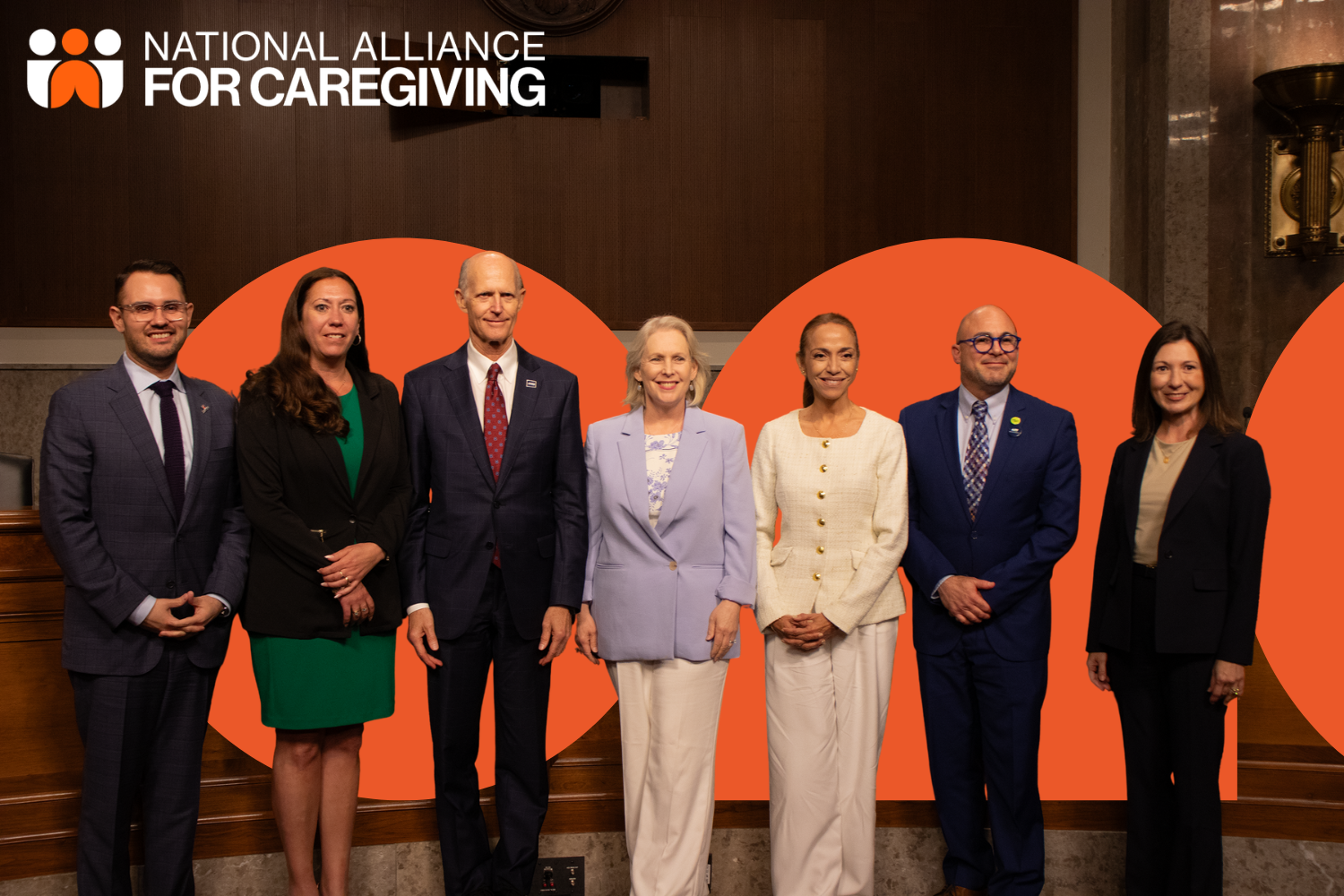
We have built America’s caregiving system on the assumption that love would be enough — that if a daughter loves her dad enough, she will figure out the rest on her own. That she’ll muscle through the insurance appeals. Navigate the Medicare maze. Coordinate medications across three specialists. Master a Hoyer lift transfer at 2 a.m. But love was never going to be enough, and the data has been telling us so for years.
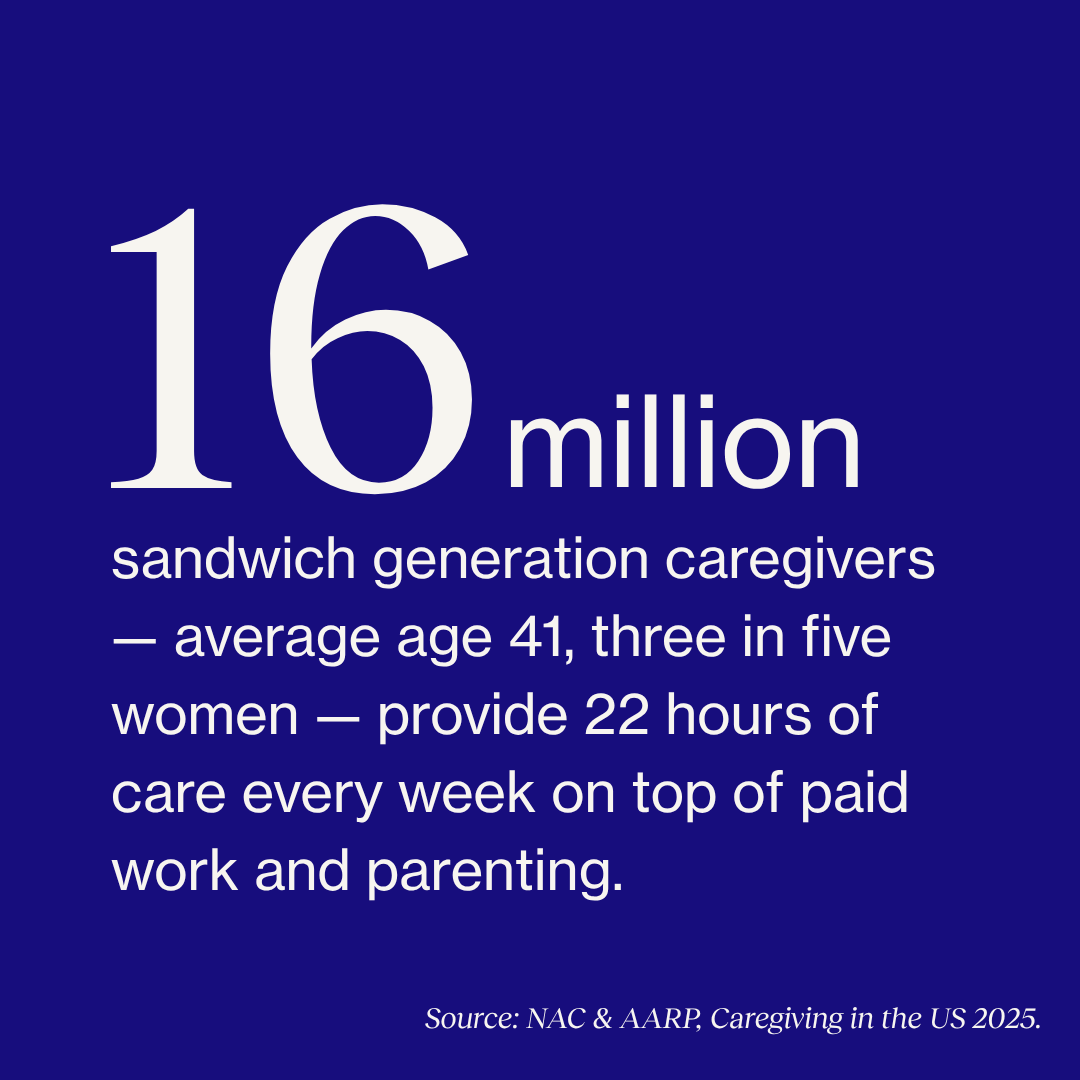 Sixteen million sandwich generation caregivers — average age 41, three in five women — provide 22 hours of care every week on top of paid work and parenting. Nearly three in five perform medical or nursing tasks at home, and four in ten do so without any prior training. Fifty-eight percent take on debt, deplete savings, lose income, or leave the workforce entirely. Together, family caregivers deliver more than $1.1 trillion in care every year, according to AARP.
Data speaks volumes in the abstract, but it provides no perspective on the real life, day-to-day experience of a caregiver juggling a nursing baby in one arm and a mother with declining health in the other. That’s why the National Alliance for Caregiving and Daughterhood teamed up to make sure the family caregiver wasn’t just the subject of conversation on May 13th, but her voice was at the center of it.
This is the gap our partnership exists to close. The National Alliance for Caregiving brings the rigorous data — the scale, the economics, the policy levers. Daughterhood brings the national network of family caregivers who know, in granular detail, what it actually looks like when policy meets the kitchen table at 6 a.m. They know where the Medicaid form is six pages too long, where the Medicare Advantage “caregiver benefit” turns out to be unreachable in practice, where respite hours technically exist but the workforce to deliver them does not.
Policy is stronger, more durable, and more practical when it draws on both. Data tells us what is happening at scale. Lived experience tells us where well-intentioned policy fails to translate into a real family’s day. You cannot design effective caregiver policy without both. 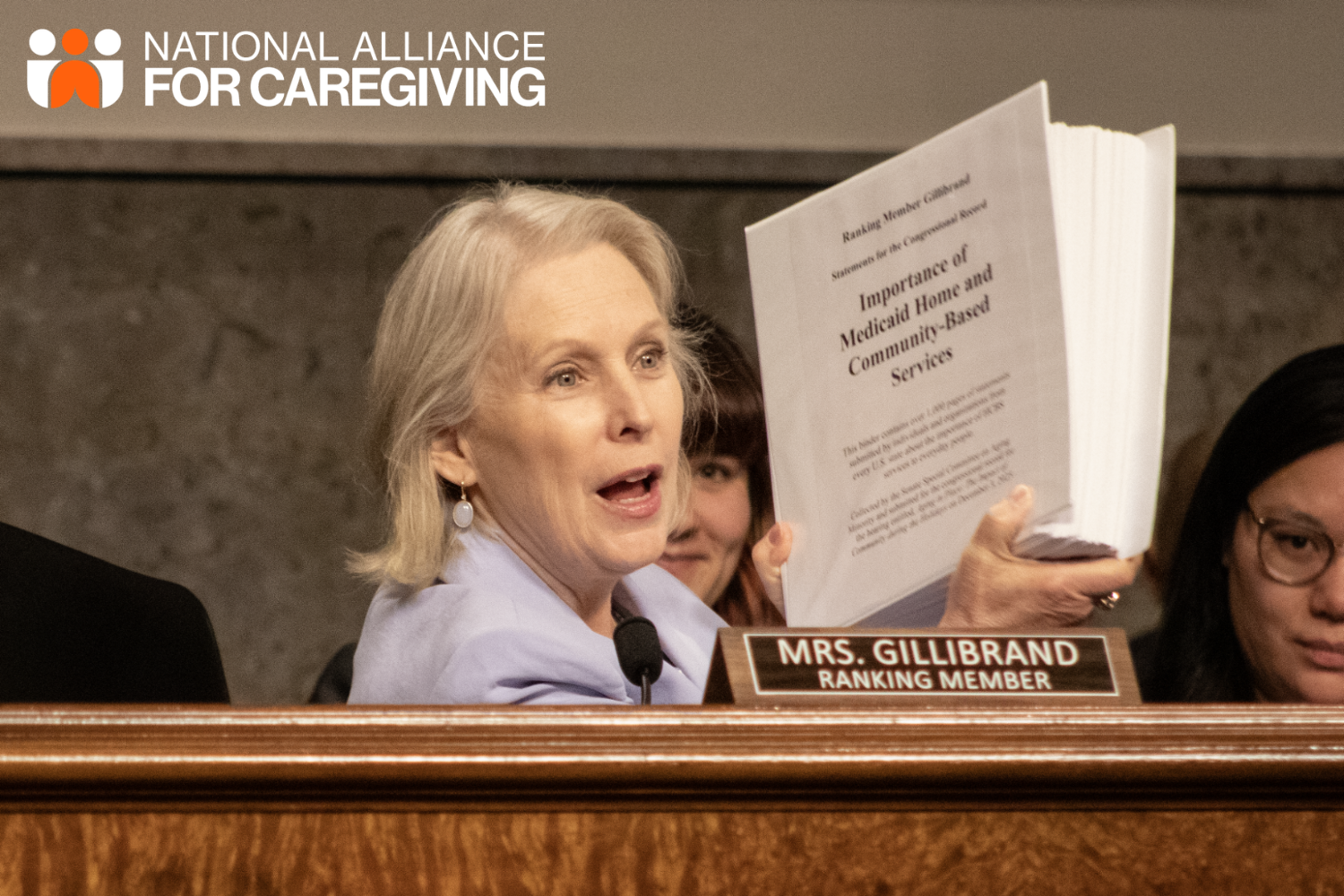
May 13 was a milestone, but it was just the beginning. The hearing surfaced a real legislative agenda with opportunity to meet this moment: the Social Security Caregiver Credit Act, the FAMILY Act, the Multigenerational Home Caregiver Credit Act, the WISH Act, the ABC Act, reauthorization of the Older Americans Act, the ASAP Act and full funding for the National Strategy to Support Family Caregivers. These bills begin to address the realities caregivers face every day, but caregiving policy is strongest when family caregivers themselves help shape it — not simply when they are discussed within it. Our work ahead is to ensure the family caregiver is no longer just a guest at the policy table, but a key decisionmaker at it. Our work ahead is to ensure the family caregiver forgoes their role as a guest at the policy table and becomes a key decisionmaker at it.
So we celebrate the progress that May 13 represents, but our work here is far from done. We will continue to fight to ensure caregivers like Meg are no longer a symbol of representation, but a permanent fixture in how policy gets made.