When Care Becomes a Crisis: America’s Growing Caregiver Gap
Anita in Atlanta, Georgia, left her job early to care full-time for her mother who has cancer and dementia. She worries every day about what will happen when her savings run out. In Hawthorne, California, Ty juggles a part-time job while caring for her mother with Alzheimer’s disease, struggling to find affordable support services in her community.
These women represent the face of America’s hidden healthcare workforce—and they’re reaching a breaking point.
A Crisis Hiding in Plain Sight
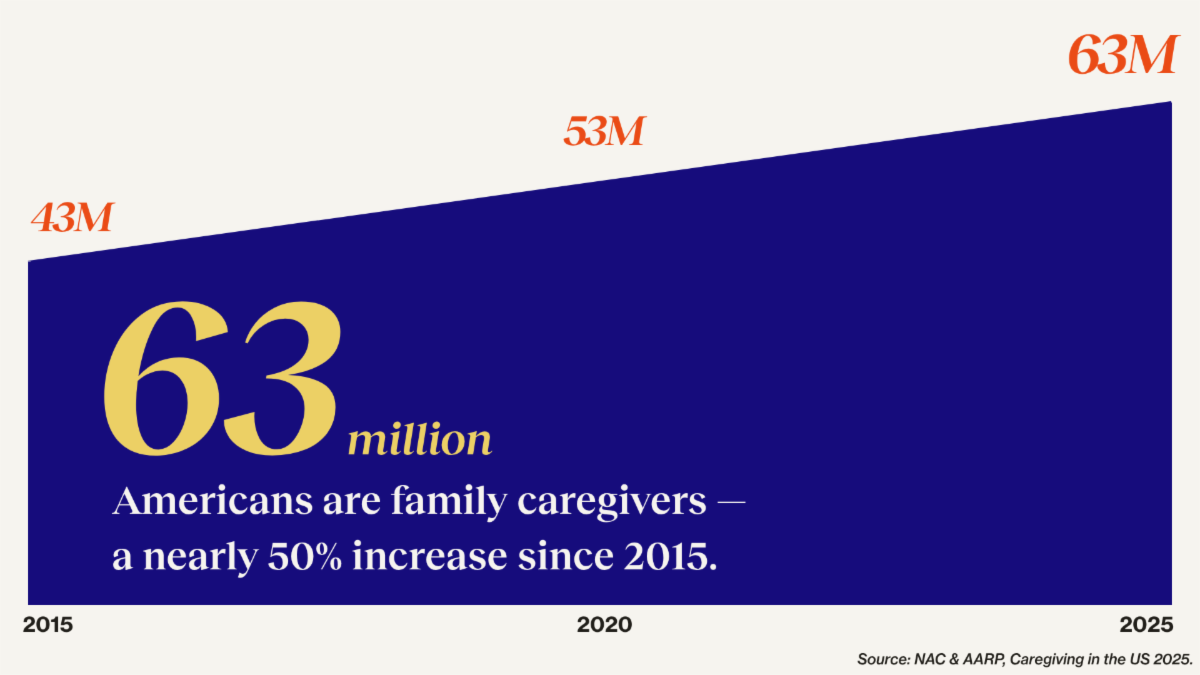
New data from the National Alliance for Caregiving and AARP’s Caregiving in the US 2025 project finds: Nearly one in four American adults—63 million people—are now providing care to family members or friends with serious illnesses, disabilities, or age-related challenges. That represents a staggering 45 percent surge in family caregivers since 2015, adding 20 million more family caregivers in just a decade.
This isn’t occasional help with grocery shopping. Today’s family caregivers are managing complex medical tasks that once required trained healthcare professionals. Nearly half are in “high-intensity” caregiving situations, handling multiple chronic conditions and performing tasks that were once limited to hospitals and nursing homes. Most now handle at least four instrumental activities of daily living—bathing, feeding, medication management—an increase from 67 percent in 2020 to 72 percent today.
The commitment runs deep and long. The average caregiver provides care for 5.5 years, with 30 percent already caregiving for more than five years—up from 24 percent in 2020. Many find themselves in the “sandwich generation,” simultaneously caring for aging parents and children under 18.
The Human and Economic Toll
The statistics tell only part of the story. Behind every number is someone like Anita, forced to choose between career and caring, watching savings evaporate while shouldering responsibility that’s valued at $600 billion collectively according to AARP.
The financial devastation is widespread and systematic. More than one-third of caregivers have stopped saving entirely. Nearly a quarter have exhausted their short-term savings, while 13 percent have raided retirement funds just to manage caregiving expenses. Almost half report negative financial impacts including reduced wages and unpaid bills.
The hardship falls disproportionately on communities that have historically faced deep inequities. Women comprise 61 percent of caregivers and typically provide more intensive care for longer periods. Black and Latino caregivers face higher rates of financial strain while being more likely to balance employment alongside caregiving responsibilities.
Perhaps most devastating is the isolation. Nearly one in four caregivers reports feeling alone—an increase since 2020. This isolation is particularly acute among women, LGBTQ+ caregivers, and those trying to balance jobs with care duties.
When Systems Fail Families
The caregiving crisis exposes fundamental gaps in America’s support infrastructure. Only 13 states and Washington, D.C., offer paid family leave, forcing families like Anita’s into impossible financial choices. Twenty-eight percent of caregivers struggle to find basic services like delivered meals, transportation, or in-home health care. Rural caregivers face even greater challenges accessing affordable local services.
For the 61 percent of caregivers who are also employed, workplace support remains a privilege of salaried workers. While remote work and flexible schedules became more common during the pandemic, hourly workers—who often need support most—continue to face rigid policies that force them to choose between paychecks and caregiving.

Building a More Caring Future
The family caregiving crisis demands urgent, coordinated action across four critical fronts:
- Supporting the Care Continuum: Policymakers and advocates must recognize that caregiving happens across the lifespan and requires comprehensive solutions that address the full spectrum of care needs. It’s time to recognize and value this continuum of care that we all experience and benefit from by advancing bridge policies like paid family and medical leave.
- Revolutionizing Healthcare: We must recognize family caregivers as the essential partners they are, not the invisible workforce they’ve been. Healthcare systems need to formally integrate family caregivers into care teams, providing them with proper training, decision-making authority, and direct communication channels with medical providers. This means restructuring reimbursement models to recognize the contributions of family caregivers, creating caregiver-specific support services within health systems, and treating family care coordination as a billable, professional service rather than an assumption.
- Workplace Revolution for All Workers: More employers must extend flexible work arrangements and caregiver benefits beyond salaried employees to include hourly workers who disproportionately shoulder caregiving responsibilities. Companies that lead on caregiver support will gain competitive advantages in talent retention and productivity.
- Foster Caregiver Friendly Communities: We must reauthorize and fully fund Older Americans Act programs that provide the foundational caregiver support services in local communities nationwide. Equally critical is protecting home and community-based services through Medicaid from further cuts, as millions of family caregivers depend on these services to make caregiving sustainable.
The Stakes Couldn’t Be Higher
America’s 63 million family caregivers represent the invisible workforce keeping our healthcare system afloat, our families together, and our communities functioning. Yet we’re asking them to sacrifice their financial security, career prospects, and mental health to fill gaps in our caregiving infrastructure.
Our latest research in Caregiving in the US 2025 gives us the clearest picture yet of what these Americans need to continue their essential work. The data is clear, the need is urgent, and the solutions are within reach. The question isn’t whether we can afford to support America’s caregivers—it’s whether we can afford not to act while families like Anita’s and Ty’s shoulder this crisis alone.