The Power of Lived Experience in Advancing Caregiving Policy: Lessons from the Caregiver Nation Summit
At this year’s Caregiver Nation Summit, one theme rose above all others: gratitude. Gratitude for the caregivers who show up day after day. Gratitude for the stories that help us see one another more fully. And gratitude for the leaders willing to turn their personal caregiving experiences into public action.
That spirit defined a powerful conversation with Senator Andy Kim of New Jersey, whose story illustrates how lived experience is shaping a new era of caregiving policy.
Senator Kim’s caregiving journey began before he ever set foot in the U.S. Senate. His father had struggled with health issues for years, but during the campaign, everything changed. A severe fall led to hospitalization, declining mobility, and ultimately an Alzheimer’s diagnosis.
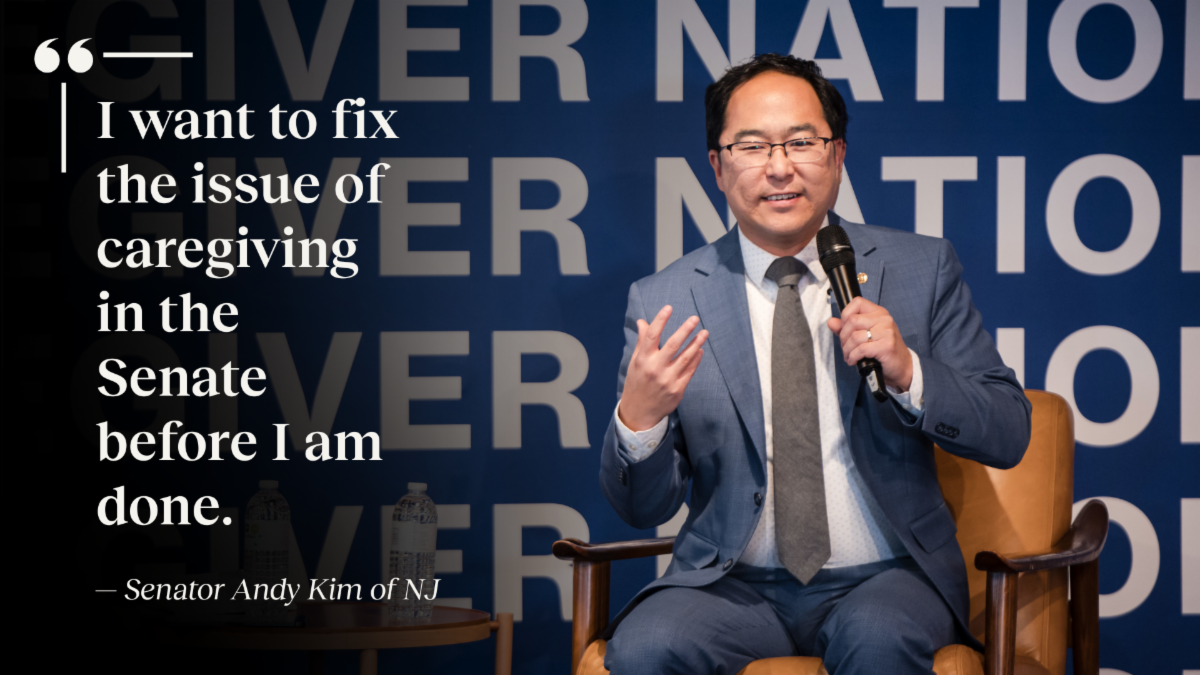
At the same time, Senator Kim and his wife were raising two young children. He describes the chaos of managing emergencies, making medical decisions, and maintaining a demanding job—all while navigating an evolving father-son relationship. “There are times when I feel trapped,” he shared, naming a feeling familiar to millions of caregivers.
His turning point came when his worlds collided. He rushed from a crisis involving his father to an urgent call from Washington demanding he return for an all-night voting session. That night, standing on the Senate floor, he declared publicly for the first time: “I’m a caregiver.”
The decision wasn’t calculated. It was human. He realized his colleagues didn’t truly know him if they didn’t know this part of his life. “And there’s no more persuasive way to talk to someone than storytelling.”
A National Story Backed by Research
Senator Kim’s experience is deeply personal—but also profoundly common. NAC’s research makes that clear.
From Caregiving in the US 2025 to our latest Caring Across States, our research with AARP finds there are more than 63 million Americans in every community and zip code engaged in demanding care, many performing complex medical tasks with little training or support, reporting severe emotional, financial, and physical strain.
And I recently teamed up with child care expert Elliot Haspel make the case that these numbers are the floor, not the ceiling. When we widen the frame to include childcare, as many as 130 million Americans are involved in some form of care. Sixteen million live in the “sandwich generation,” caring for children and adults simultaneously—exactly what Senator Kim is experiencing.
Yet while families live caregiving as one interconnected reality, our support systems remain fragmented. This piecemeal approach leaves caregivers exhausted and too often alone.
Giving Thanks Through Action
This is why NAC is focused on showing our gratitude for family caregivers through our action for system change. Research tells us the scale of the crisis. Stories humanize the experience. Policy action transforms lived reality into lasting change. Meaningful progress requires all three.
Senator Kim described caregiving as a “horizontal thread” connecting people across political, generational, and cultural divides. His story reminds us that behind every number is a person. Behind every caregiving role is a life in motion. And behind every policy debate is an opportunity to build a more connected, caring America.