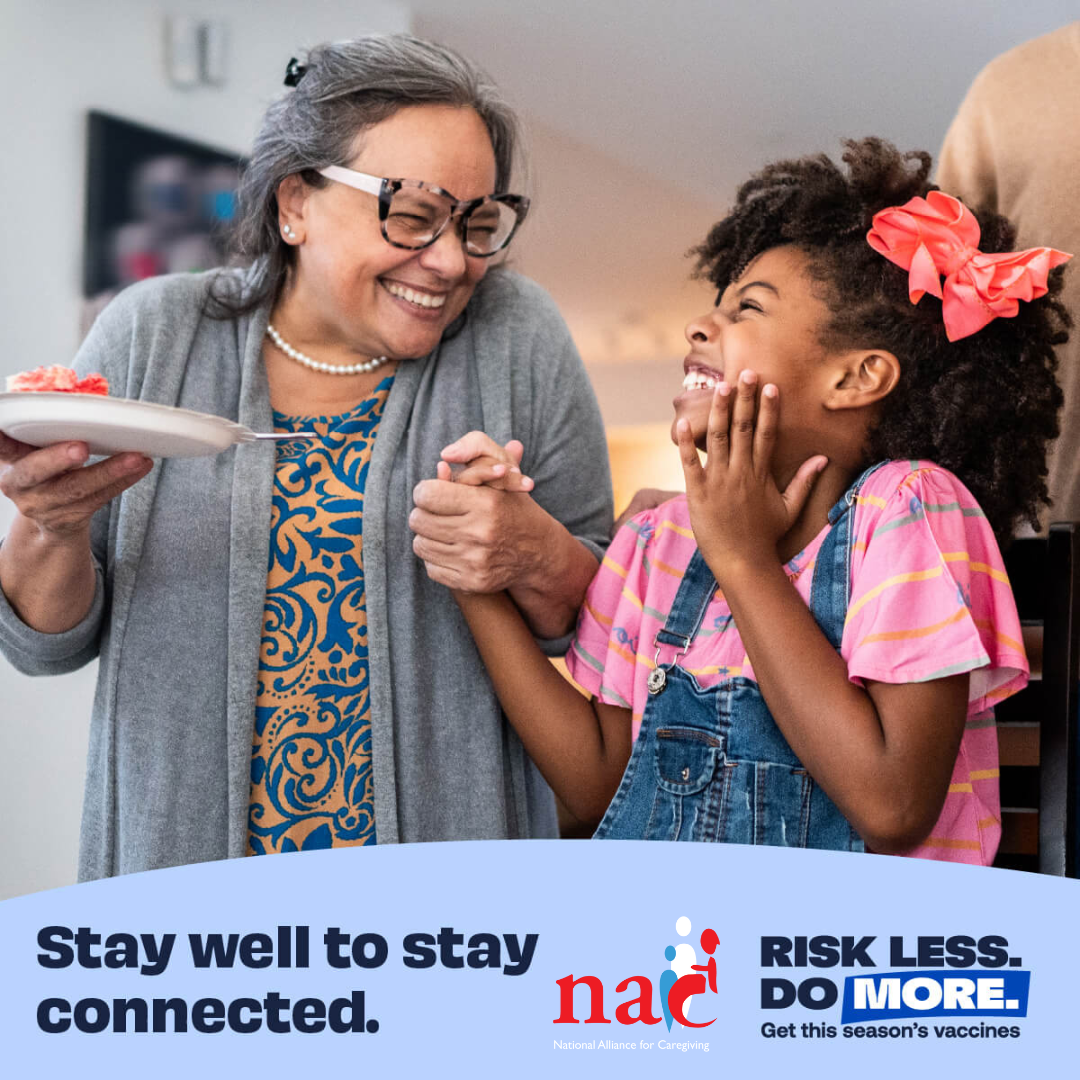
(WASHINGTON, D.C. Oct. 7, 2024) — The National Alliance for Caregiving (NAC) is excited to partner with the U.S. Department of Health and Human Services’ (HHS) new national campaign—Risk Less. Do More. —to raise awareness of the latest vaccines for influenza (flu), COVID-19, and respiratory syncytial virus (RSV). NAC and HHS will work together to provide important evidence-based information on these common respiratory viruses and on the latest vaccines to all residents of the United States, especially those at highest risk of severe illness.
“We are excited to support this campaign as many caregivers are caring for individuals who are especially vulnerable to respiratory illnesses, such as older adults, people with chronic health conditions, and young children,” said Jason Resendez, president and CEO of NAC. “By encouraging vaccination among both caregivers and their loved ones, we can create a safer and healthier environment for everyone.”
As part of the partnership, NAC will disseminate information about the flu, COVID-19 and RSV vaccinations through communication channels (website, social, newsletter etc.). This ensures that accurate and helpful information reaches the caregiving community.
Through this partnership, NAC will share campaign information from HHS about flu, COVID-19, and RSV vaccines through our website, social media and other channels. This ensures that accurate and helpful information reaches the caregiving community to help caregivers make informed decisions about vaccination.
“HHS is proud to partner with NAC. The activities and events we will be collaborating on will help the campaign reach people across the country,” said May Malik, deputy assistant secretary for Public Affairs for Public Education at HHS. “As we know, vaccines are our best defense against flu, COVID-19, and RSV. Our goal with this partnership is to provide accurate and timely information so that the American people can make informed decisions about getting vaccinated this fall and winter.”
Flu, COVID-19, and RSV continue to take a heavy toll across the United States. During a 6-month period during the 2023-2024 fall and winter seasons, last fall and winter, these infections caused 800,000 hospitalizations. Without immunization, the risk of serious illness remains highest among adults ages 65 and older, residents of long-term care homes, pregnant people, and those living in rural areas. Some racial and ethnic groups, including Black and Hispanic people in the United States, are also at higher risk.
Please visit RiskLessDoMore.hhs.gov for more information on the Risk Less. Do More. campaign. For additional information about NAC, visit caregiving.org.
About the National Alliance for Caregiving
Established in 1996, the National Alliance for Caregiving (NAC) is a national membership coalition that brings together more than 50 national healthcare companies and nonprofits, care innovators, caregiving advocacy organizations, and financial services leaders to build health, wealth, and equity for America’s 53 million family caregivers. From championing our nation’s first-ever national caregiving strategy to releasing new insights on the realities of caregiving, NAC works tirelessly to make caregiving more sustainable and equitable through agenda-setting research, programming, and policy change. Learn more at http://www.caregiving.org.
About Risk Less. Do More. The U.S. Department of Health and Human Services (HHS) Pan Respiratory Virus (PRV) Public Education Campaign (PEC), Risk Less. Do More., seeks to inform the public about the influenza (flu), COVID-19, and respiratory syncytial virus (RSV) vaccines.
The campaign aims to motivate higher uptake of the flu, COVID-19, and RSV vaccines during the 2024–2025 season, reducing the public health burden of respiratory viruses for individuals, families, communities, and the nation. Additionally, the campaign will increase public confidence in the flu, COVID-19, and RSV vaccines; cultivate vaccine literacy; and enhance awareness of vaccine accessibility, especially within vulnerable communities. For more information, visit RiskLessDoMore.hhs.gov.