2024 Report Unveils Alarming Gaps in Family Caregiver Programs in U.S. Transplant Centers
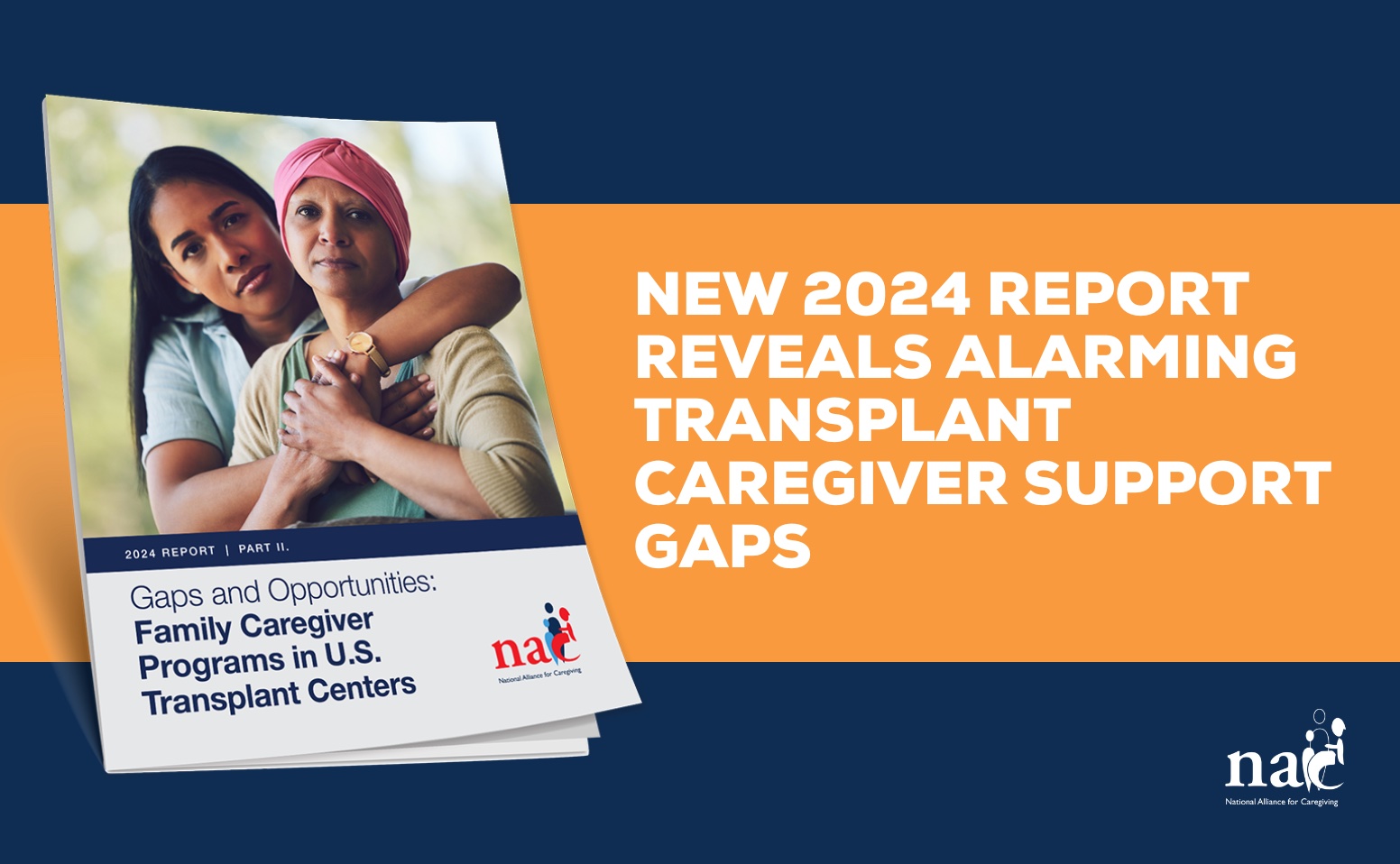
(Washington, D.C., Nov. 12) – Today, the National Alliance for Caregiving (NAC) released new research revealing significant gaps in family caregiver support across U.S. transplant centers. The report, “Gaps and Opportunities: Family Caregiver Programs in U.S. Transplant Centers,” documents critical shortfalls in support services and programs for family caregivers – whose contributions are vital to successful transplant outcomes.
Based on a survey of 114 transplant centers, the report demonstrates an urgent need for healthcare system reforms to strengthen caregiver support and ultimately improve patient health outcomes.
Caregiver contributions are critical to the success of the transplant process. These individuals provide crucial practical, physical, and emotional support to patients before, during, and after lifesaving organ, stem cell, or bone marrow transplants. Their presence is so vital that it’s frequently a prerequisite for a recipient to receive a transplant. Yet, little attention is paid to their experiences and needs.
“Transplant caregivers shoulder extraordinary responsibilities that can span decades, yet our research reveals alarming gaps in the support they receive,” said Jason Resendez, NAC President and CEO. “While transplant centers recognize the vital role of family caregivers, the absence of standardized practices and coordinated support programs creates concerning disparities that must be addressed. Our findings make clear that comprehensive caregiver evaluations, support, and training protocols across all transplant centers are needed to ensure better outcomes for both patients and their caregivers.”
Key Report Findings:
- Inconsistent Caregiver Evaluation Practices: While individual caregiver reviews are most frequently conducted when the recipient is on the waitlist, only 3% of centers perform these reviews at regular intervals.
- Gaps in Caregiver Support Needs Assessment Protocol: More than 40% of respondents reported that their centers either lacked written procedures for assessing caregiver support needs or were unaware of such documentation processes.
- Barriers to Comprehensive Caregiver Support: Most transplant centers offered between 2-4 types of family caregiver support programs; however, 30% had none.
- Transplant Centers Lack Standardized Practices for Caregiver Education and Training: While 58% of centers offer some form of caregiver-specific education and training, there is variability in the type and timing of the training offered.
- Underutilization of Medicare Billing Codes for Caregiver Training Services in Transplant Centers: Despite high awareness (80%) of new Medicare billing codes for Caregiver Training Services (CTS), only a small fraction of transplant centers (7%) are actively using them.
The report offers six concrete recommendation to close the gaps in transplant caregivers’ health and wellbeing, which will be tracked, measured, and reported by NAC and its partners:
- Implement a standardized screening process during the transplant waitlist/referral period with the goal to reduce bias and health inequities and to identify caregivers who need additional support at the onset of transplant care.
- Conduct additional evidence-based research focusing on the diverse needs of transplant caregivers from various demographic and socioeconomic backgrounds to address existing health inequities in the transplant system.
- Integrate dedicated caregiver coordinators within transplant teams to identify, address, and support caregivers and their needs along the transplant journey.
- Promote the wide adoption of new Medicare Caregiver Training Services (CTS) billing codes across all types of transplant centers to enhance access to essential training and support services for family caregivers.
- Standardize processes to collect and store caregiver data across transplant centers to assess and document caregiver needs which can improve care coordination, continuity of care, and can inform outcomes-based caregiver research.
- Implement comprehensive, standardized caregiver support programs at transplant centers that are targeted, consistent, evidence-based, and provided continuously throughout the entire transplant journey, from pre-transplant evaluation through long-term post-transplant care, to ensure equitable and effective support for all caregivers.
This report builds on NAC’s Transplant Caregiving Collaborative, launched in 2023. The collaborative’s initial study, “Transplant Caregiving in the U.S.: A Call for System Change,” outlined five key recommendations for improving transplant caregiver support, drawing insights from focus groups with family caregivers, healthcare professionals, and transplant experts. Through this Collaborative, NAC is committed to advancing system change for families navigating transplant care.
###
About the National Alliance for Caregiving
Since 1996, the National Alliance for Caregiving (NAC) has been a catalyst for change, transforming how the United States recognizes, supports, and values our 53 million family caregivers providing complex care. Through our nationally recognized research and our advocacy for the first-ever National Strategy to Support Family Caregivers, we drive the policy, system, and culture change needed to make family caregivers a national priority. With more than 50 members, we build partnerships across aging, disability, healthcare, philanthropy, and the private sector to make caregiving more sustainable, equitable, and dignified. For more information visit: https://www.caregiving.org