Policy Agenda
The policy work of the National Alliance for Caregiving is anchored in the belief that caregivers are essential to our families, healthcare systems, and economy — and deserve systems that truly support them. We seek common ground while advocating for our core belief: family caregivers deserve better, more supportive systems of care that make family caregiving more sustainable, equitable, and dignified.
Champion Caregiver Health and Wellness
Foster Caregiver Friendly Communities
Promote Caregiver Financial Well-Being
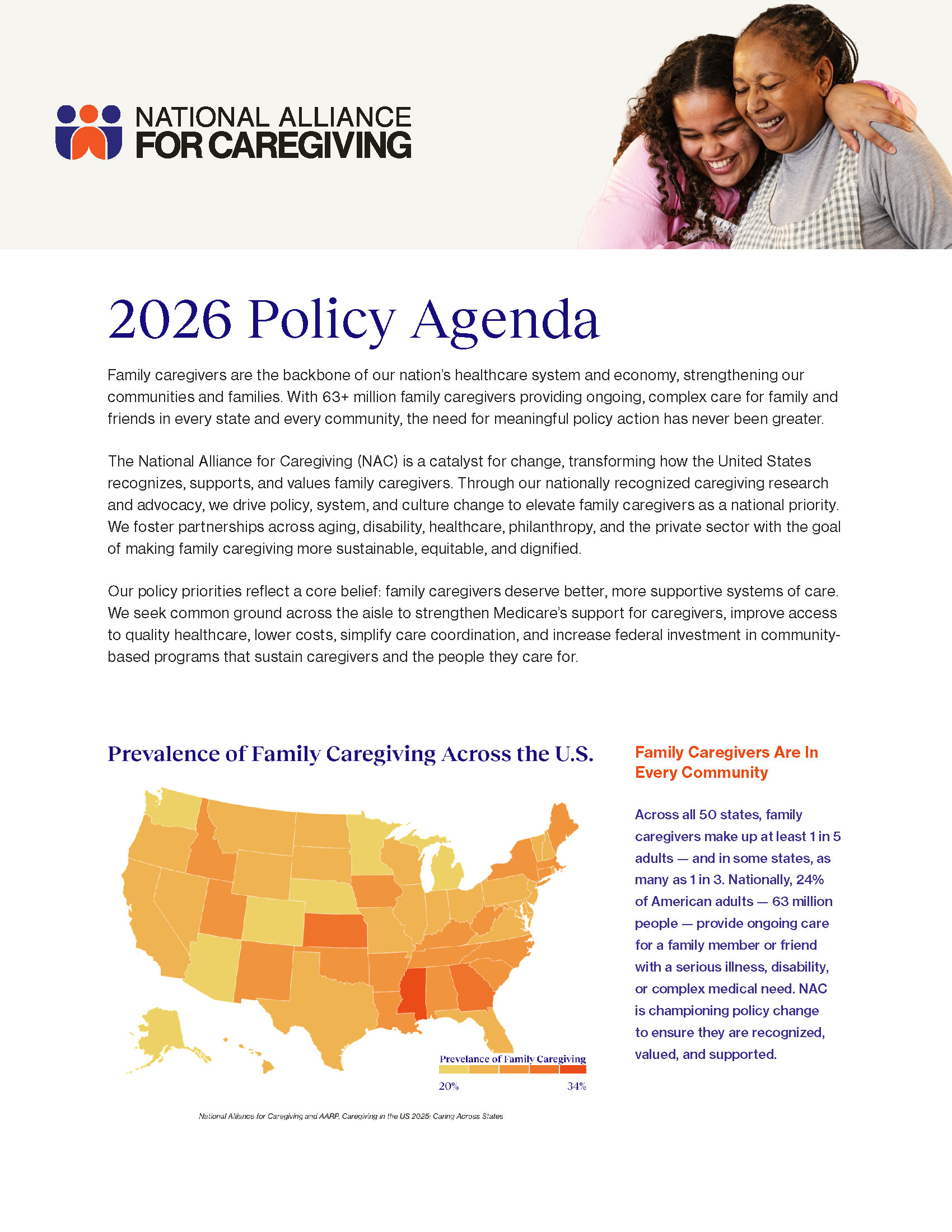
2026 Policy Priorities
Family caregivers are the backbone of our nation’s healthcare system and economy, strengthening our communities and families. With more than 53 million family caregivers providing complex care for family and friends across our country, in every state, and every community, the need for meaningful action has never been greater.
The National Alliance for Caregiving (NAC) is a catalyst for change, transforming how the United States recognizes, supports, and values family caregivers. Through our nationally recognized caregiving research and advocacy, we drive policy, system, and culture change to elevate family caregivers as a national priority. We foster partnerships across aging, disability, healthcare, philanthropy, and the private sector with the goal of making family caregiving more sustainable, equitable, and dignified.
We seek common ground while advocating for our core belief: family caregivers deserve better, more supportive systems of care.
Champion Caregiver Health and Wellness
Family caregivers are the backbone of our healthcare system, serving as essential partners to both patients and healthcare providers, yet their expertise and needs are often overlooked by the system they support.
- Protect and increase access to comprehensive care for family caregivers navigating complex care for themselves and their care partners.
- Strengthen Medicare’s recognition and support of family caregivers.
- Expand Medicare coverage of additional in-home health benefits for beneficiaries and their caregivers.
- Promote the integration and utilization of assessments to proactively identify and provide targeted intervention and support for family caregivers.
- Incentivize Medicare Advantage and Accountable Care organizations to better engage and support family caregivers.
Resources


Foster Caregiver Friendly Communities
Community-based supports, services, and resources are vital for recognizing and sustaining family caregivers. Yet, these essential services often remain limited or inaccessible to those who need them most.
- Support family caregivers at the community-level by investing in Older Americans Act (OAA) Programs and Services:
- Reauthorize and adequately fund the National Family Caregiver Support Program (NFCSP).
- Support implementation of the National Strategy to Support Family Caregivers:
- Reauthorize the RAISE Family Caregivers Act and the Supporting Grandparents Raising Grandchildren Acts.
- Adequately fund the federal programs aimed at supporting family caregivers, including caregiving projects of national significance and the Lifespan Respite Care Program.
- Protect and preserve access to Medicaid funded home and community-based services for family caregivers and their care partners, including “self-direction” programs.
- Advance and protect the vital connections between direct care workers and family caregivers to promote care team integration that will lead to shared decision making, collaborative problem solving, and better communication.
Resources
Promote Caregiver Financial Well-Being
Despite contributing an estimated $600 billion to our economy, family caregivers remain largely unrecognized by our nation’s economic policies and employers, greatly jeopardizing both their financial health and our broader economic stability.
- Advocate for policies that promote economic security and workforce participation, including comprehensive paid family and medical leave and long-term care financing.
- Lower the out-of-pocket costs associated with complex care by establishing a refundable caregiver tax credit.
- Address the toxic impacts of debt and debt collection practices that family caregivers experience as they navigate complex healthcare and support systems.
Resources