Open Data

News
About
About NAC Our Mission We build partnerships in research, advocacy, and innovation to make life better for family caregivers. Learn More Our Board of Directors Our Board of Directors represents the non-profit, corporate, and academic leaders committed to improving the...Events
Upcoming Events The New Landscape: HR1 and What’s at Stake for Family Caregivers February 26 @ 2:00 pm - 3:15 pm With the passage of H.R. 1, the definition of “community engagement” has fundamentally s... Register Past Events Caregiver Insights...
NAC 990 Final
The Caregiving Exchange Newsletter August 2012
The Caregiving Exchange Newsletter October 2012
Medicaid HCBS Advocacy Toolkit_May 2026
NAC Responds to Home- and Community-Based Services Concerns
Recent statements from administration officials regarding family caregivers and community-based services, taken together with the proposed deep cuts to the HHS budget and elimination of key disability programs, have left family caregivers and the people they support...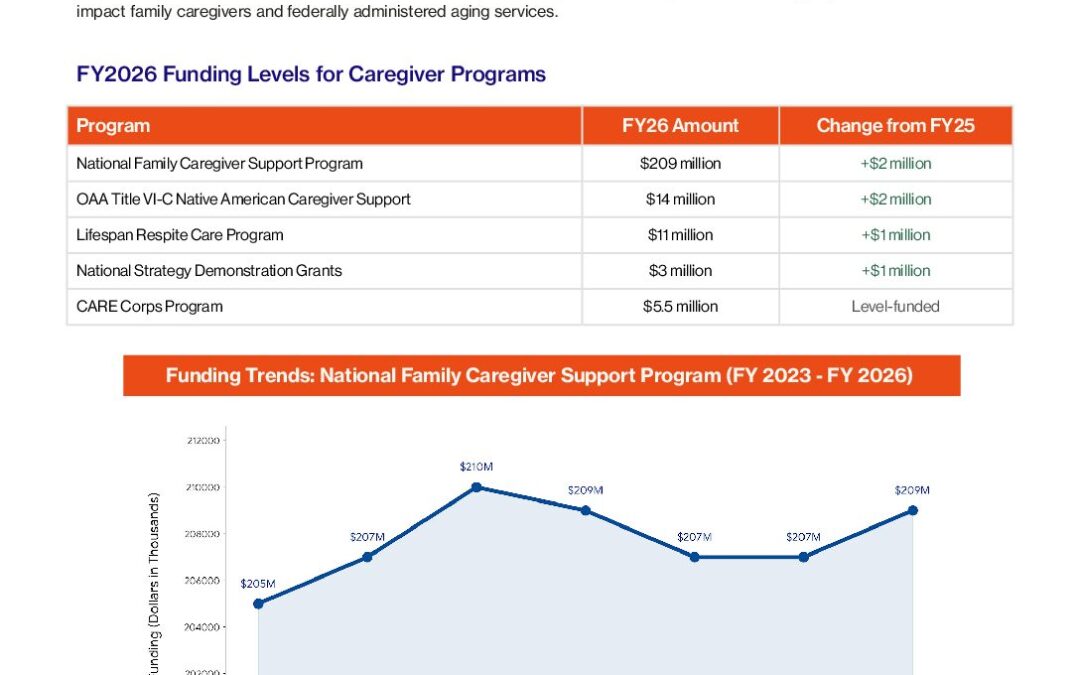
FY2026 Appropriation Snapshot_UPDATED 02.05.2026
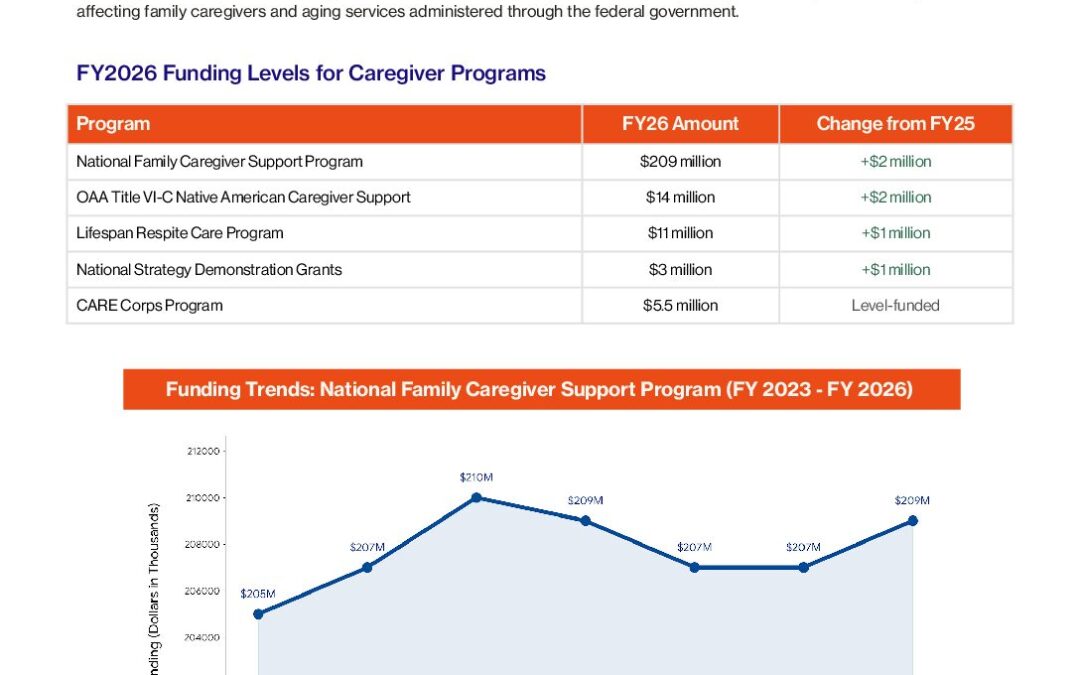
FY2026 Appropriation Snapshot_01.22.2026 (1)
NA_Transplant-Disparities-Report_082625

Caregivers are in crisis. How bad it is depends on where you live, new data shows.
Nearly 1 in 4 adults are caregivers, up 45% from the number of caregivers in the United States in 2015. That means there are 63 million adults struggling to care for their sick or disabled loved ones, often leading to financial, physical and emotional strain. While...
New State-by-State Data Expose the Crushing Financial Strain of Family Caregiving — and Call for Immediate Federal and State Action
New Findings from AARP And NAC Urge Lawmakers to Strengthen Supports for Nation’s 63 Million Caregivers. Washington, D.C. — New state-level joint analysis of Caregiving in the US 2025 by AARP and the National Alliance for Caregiving (NAC), released today, reveals how...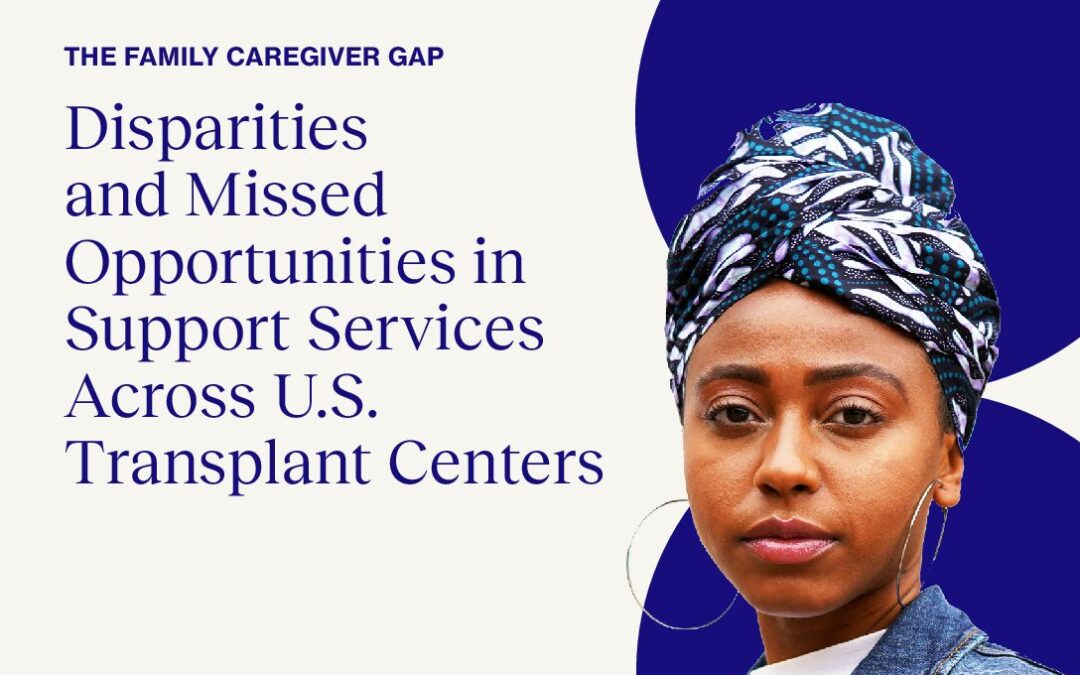
NA_Transplant Disparities Report_082625
Part2_NAC_CancerCollab_CTS-Medicare
Protected: Member Onboarding
Password Protected
To view this protected post, enter the password below:
Protected: Add Event
Password Protected
To view this protected post, enter the password below:
NAC_ParkinsonsReport_FINAL
NAC_ParkinsonsReport_FINALPolicy Agenda
Policy Agenda The policy work of the National Alliance for Caregiving is anchored in the belief that caregivers are essential to our families, healthcare systems, and economy — and deserve systems that truly support them. We seek common ground while advocating...This Week in Caregiving April 19 2023
This Week in Caregiving April 19 2023
Sheryl
Sheryl’s husband has dementia and Parkinsonian symptoms. Sheryl does everything in the household from finances to house repairs and cooking, cleaning, and maintaining their way of life. Sheryl has found it hard to take over her husband’s duties as well as her own. Two...tiaa-institute-nac-the-economic-effects-of-family-caregiving-on-women-wvoee-cothran-july-2022-0
tiaa-institute-nac-the-economic-effects-of-family-caregiving-on-women-wvoee-cothran-july-2022-0...Health Systems
Health Systems Building A Family-Centered Future The nation has begun to recognize the essential role unpaid friends and family members play in supporting individuals with ongoing health and care needs. Yet these informal supports systems are not sufficient to support...HMA_DC ICTA Program Website_updated content notes_11.3
HMA_DC ICTA Program Website_updated content notes_11.3
AARP1316_ExecSum_CaregivingintheUS_508
April 2020 Advocacy Collaborative Meeting

AARP1316_ExecSum_CaregivingintheUS_WEB

Executive Summary Caregiving in the United States 2020