

Cancer Caregiving Collaborative
About the Cancer Caregiving Collaborative
The Cancer Caregiving Collaborative brings together organizations across the cancer and caregiving sectors to create a more supportive future for the millions of family caregivers who help care for someone with cancer.
With 18 million cancer survivors in the U.S. today—projected to reach 22.5 million by 2032—family caregivers are essential yet often under-supported members of the care team throughout the entire cancer journey, from diagnosis and treatment to survivorship. They manage complex care, including medical and nursing tasks, navigate healthcare systems, and face significant emotional and financial challenges.

Our Vision
We’re working to create systemic change that ensures cancer caregivers receive:
- Essential education, training, and support to feel confident in their caregiving role
- Financial relief to ease the hardships of caregiving
By fostering collaboration among healthcare providers, support and advocacy organizations, and caregiver advocates we’re creating a system that recognizes and supports family caregivers everywhere cancer care is delivered.
Collaborative’s Core Priorities
Healthcare Integration
Financial Health
Address the financial toxicity of cancer caregiving by advocating for smart and equitable economic policies.
Cancer Caregiver Stories








Resources & Advocacy Activities
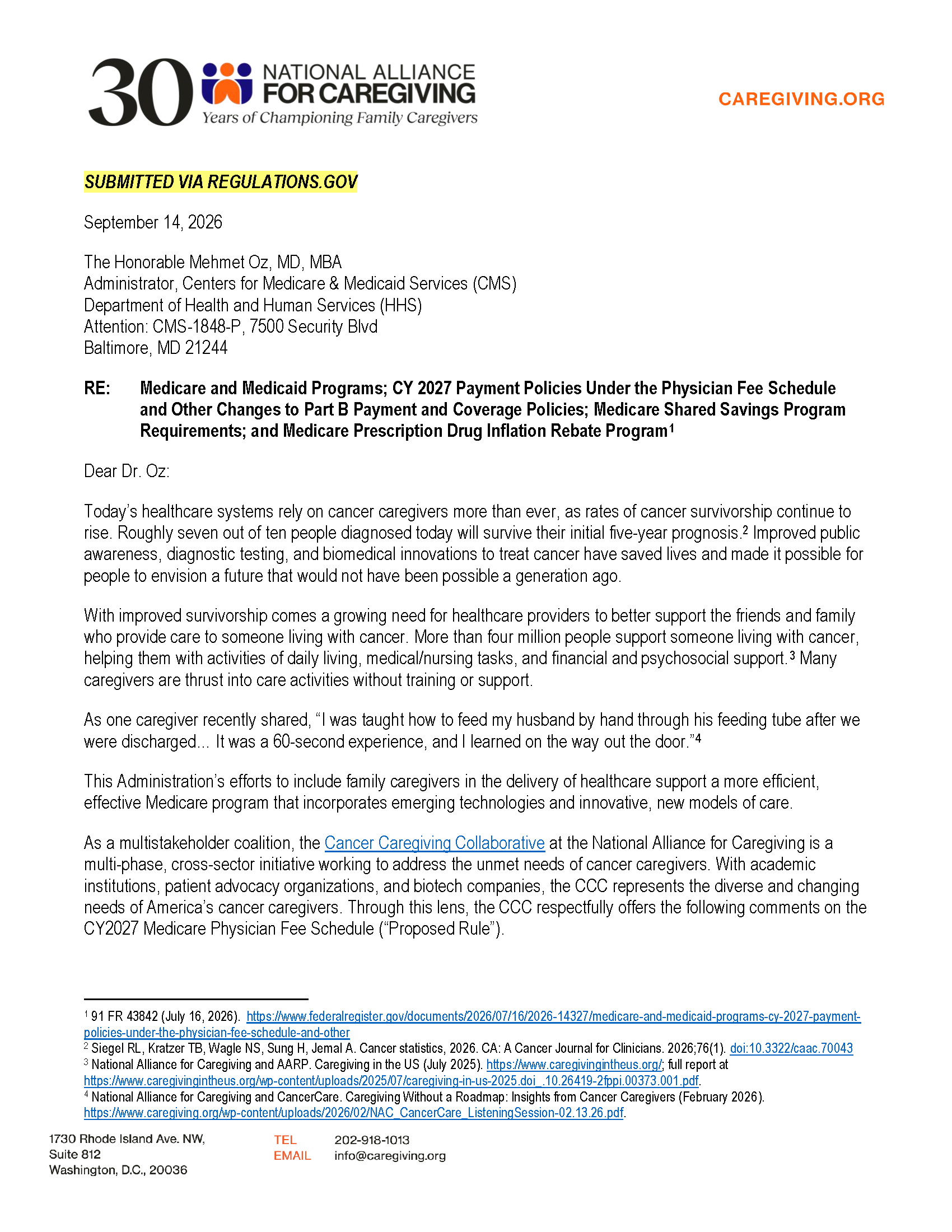
2027 Medicare Physician Fee Schedule Comment Letter to CMS
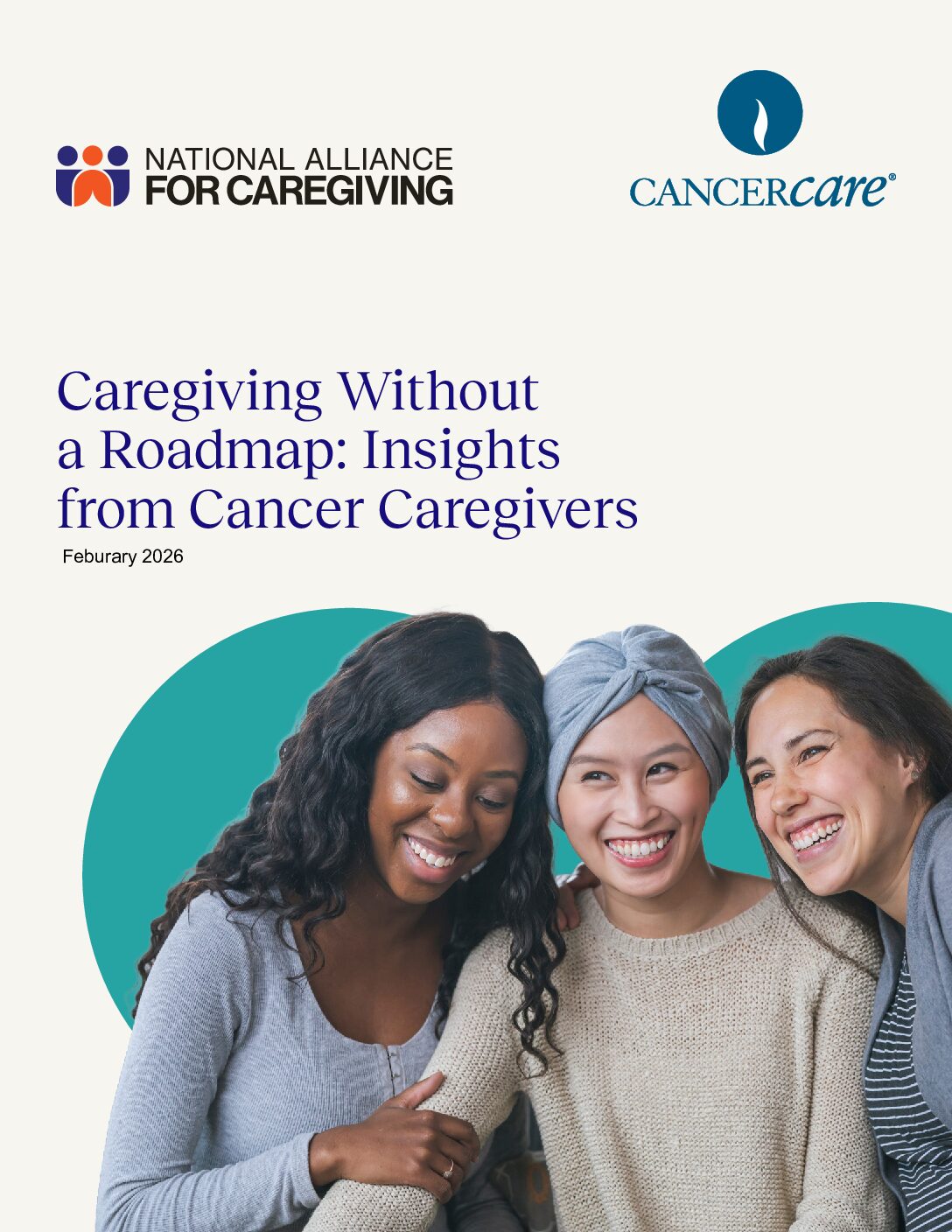
Caregiving Without a Roadmap: Insights from Cancer Caregivers
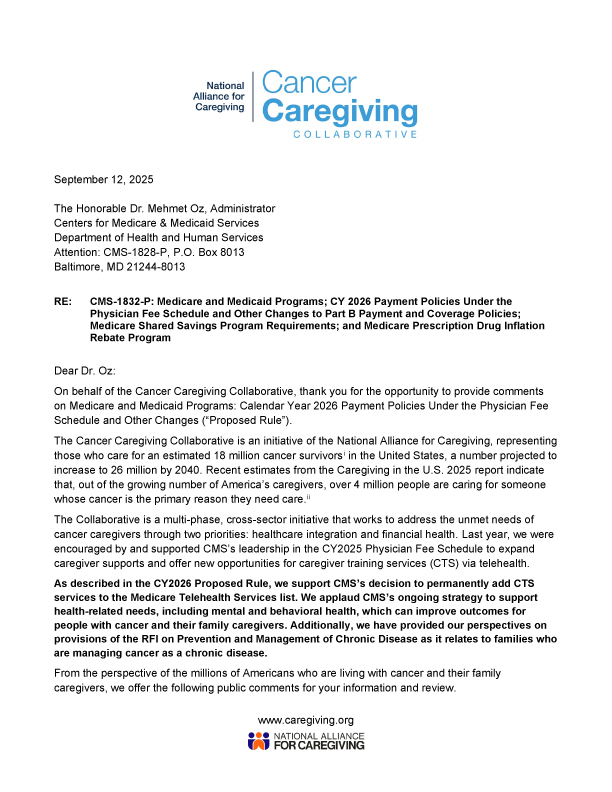
2026 PFS Comment Letter to CMS
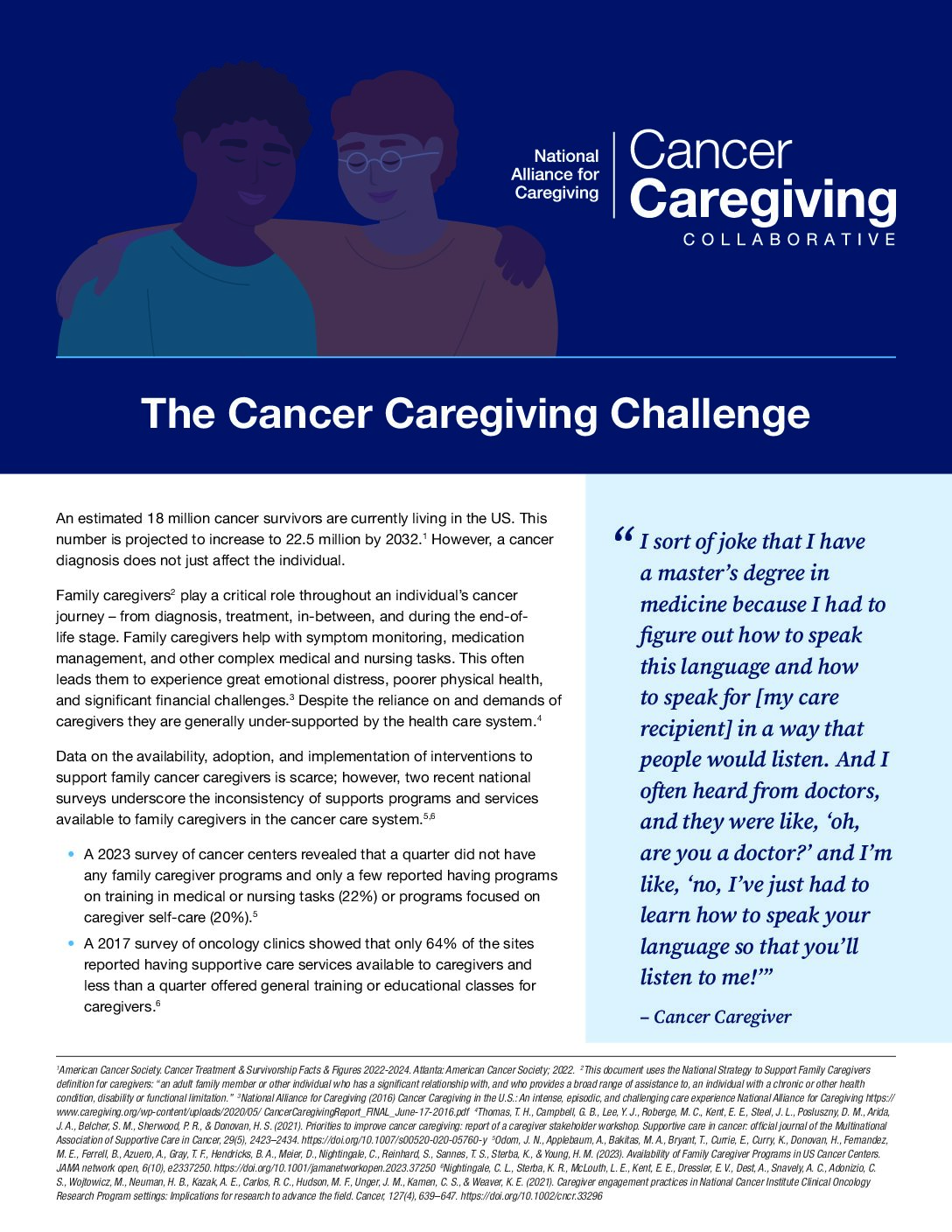
About the Cancer Caregiving Collaborative

2025 PFS Comment Letter to CMS
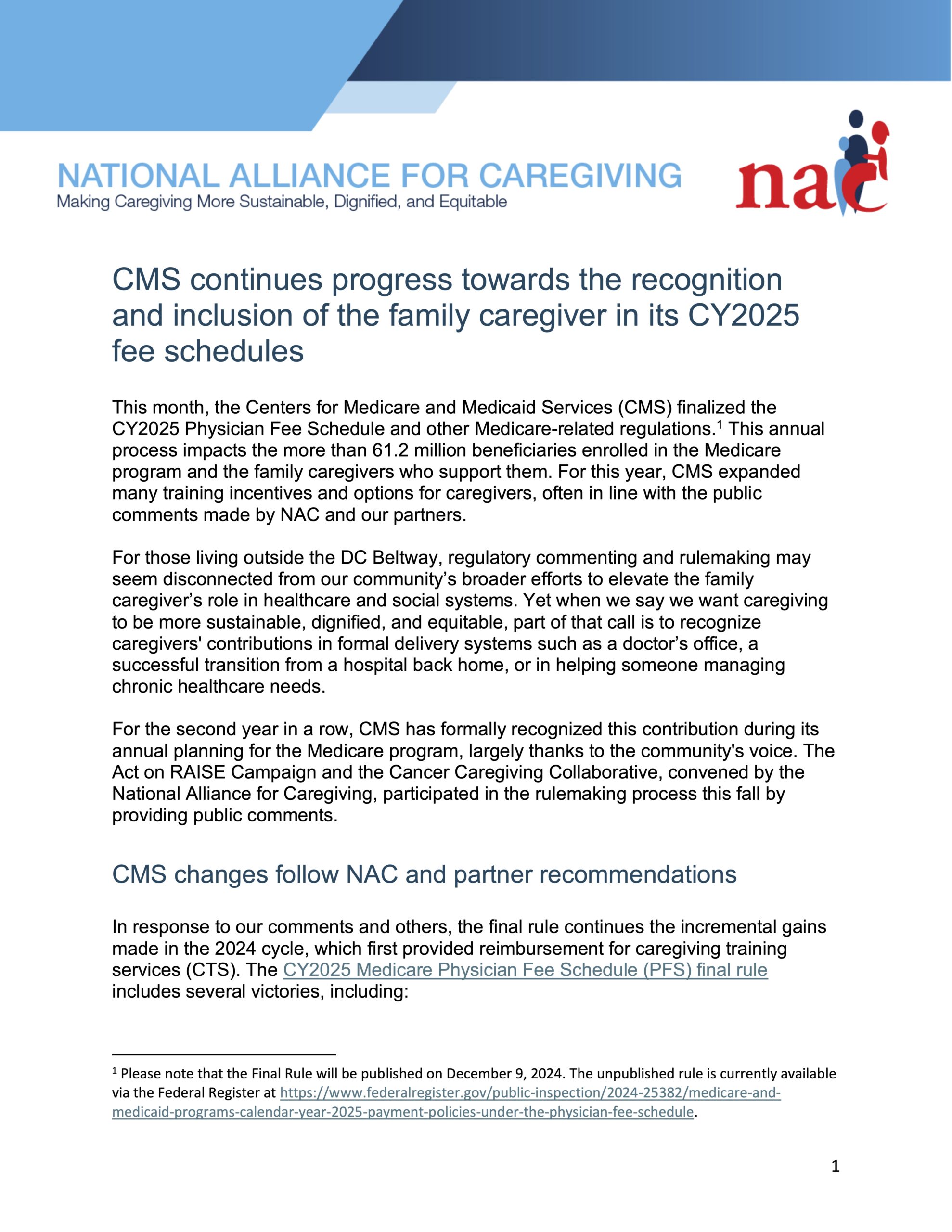
2025 PFS Update
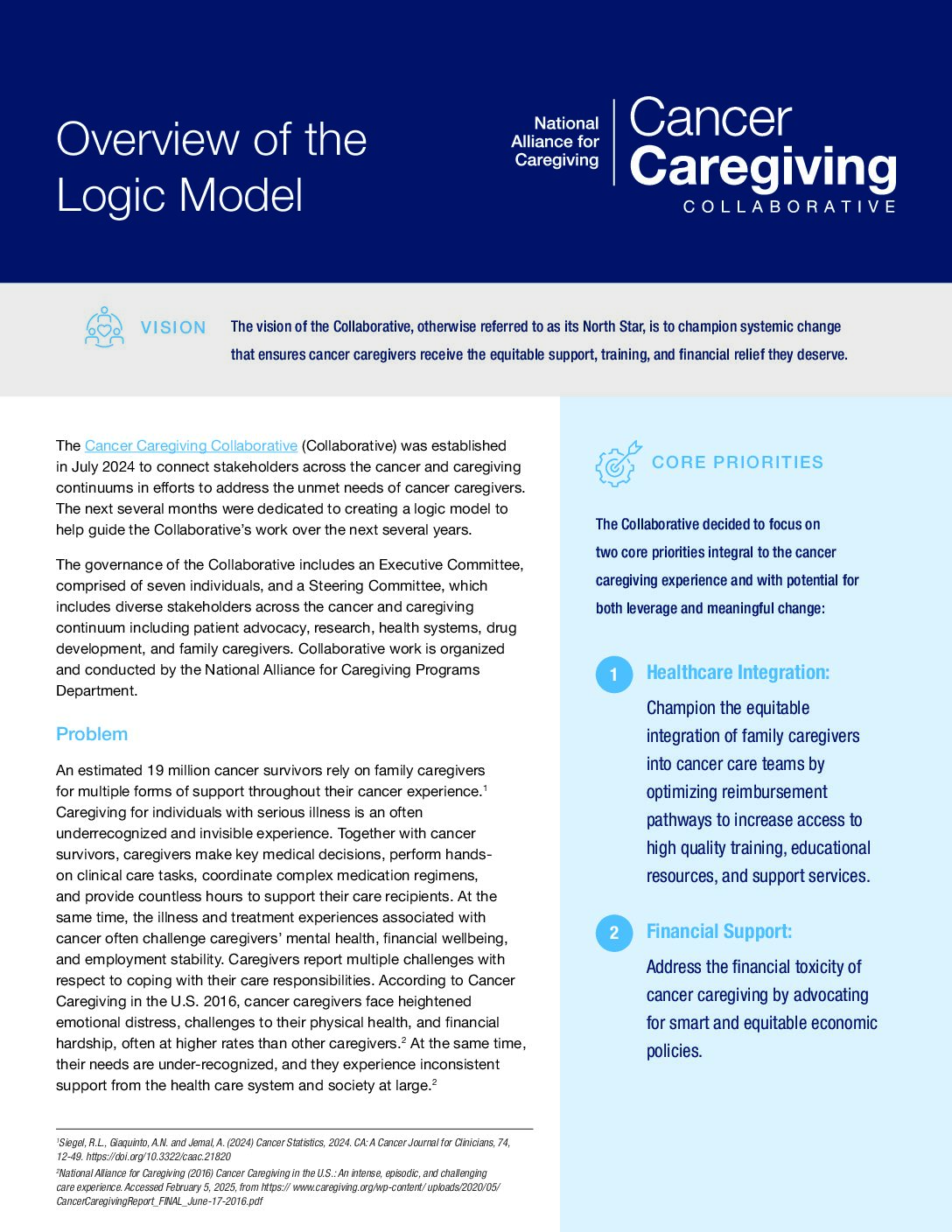
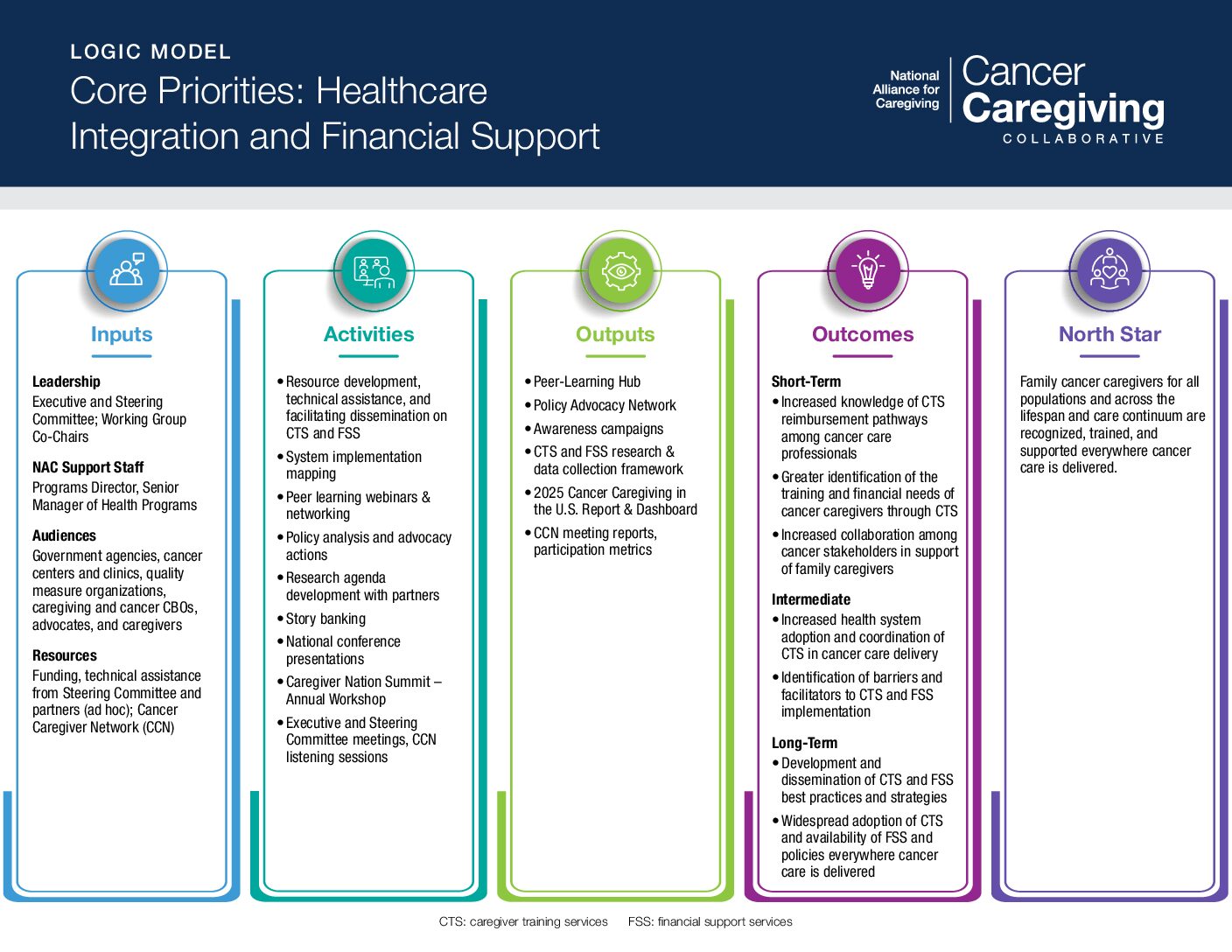
Overview of the Logic Model
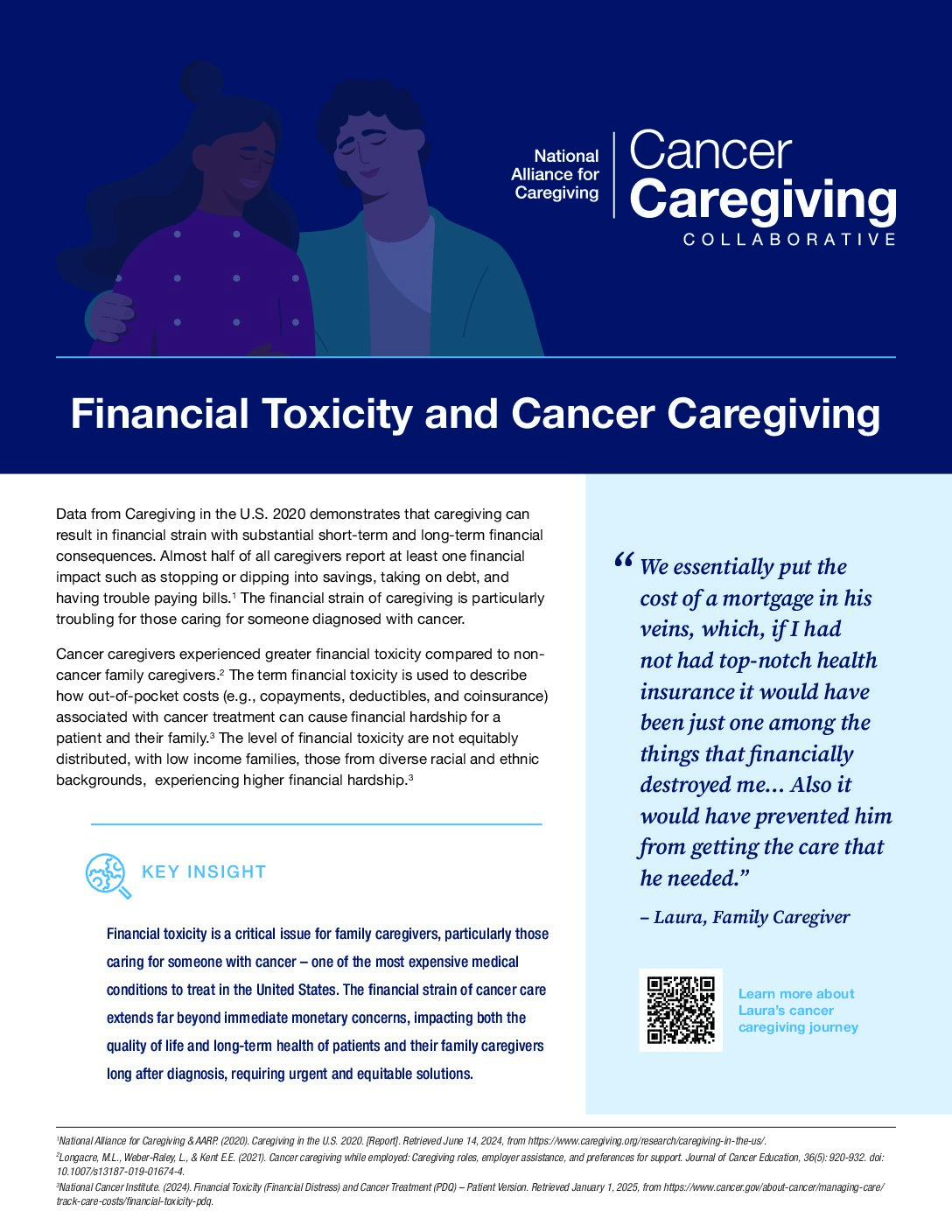
Financial Toxicity and Cancer Caregiving
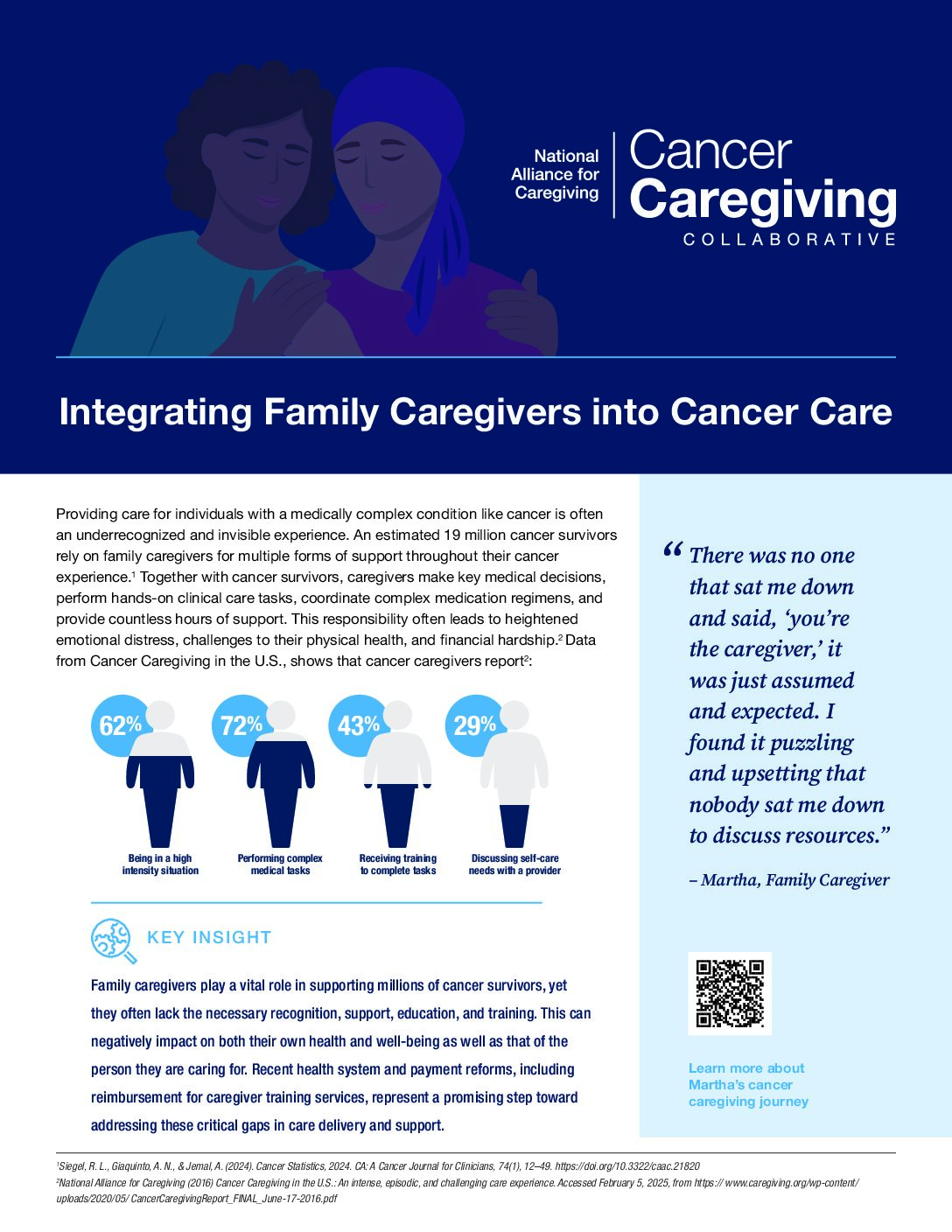
Integrating Family Care Caregivers into Cancer Care
Trends in Innovation: Implementing and Refining Caregiving Training Services in Medicare
2024 PFS Caregiver Brief
CFPB Medical Debt Letter July 2024
2023 Design Workshop Proceedings
2023 Guidebook
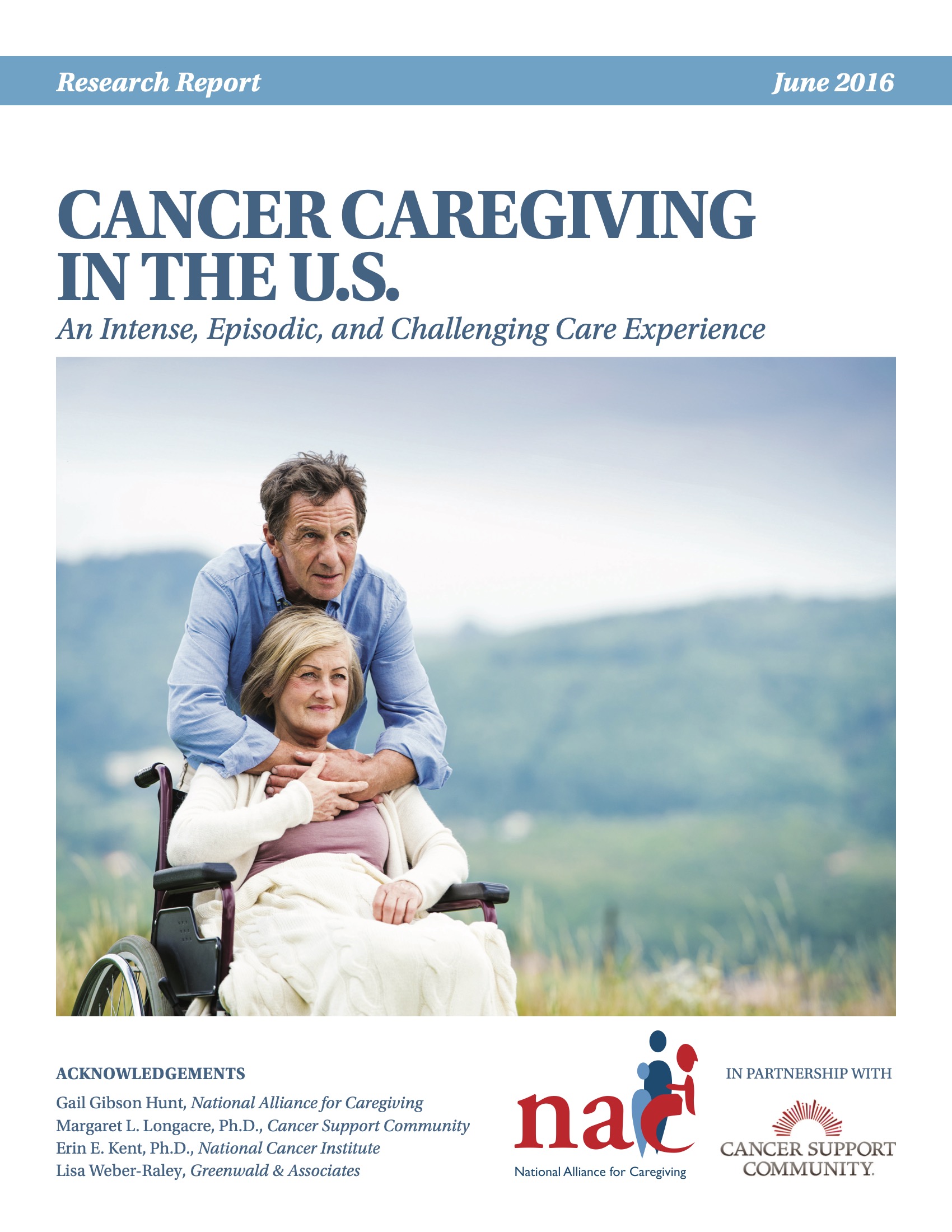
2016 Cancer Caregiving Report
Leadership
The Collaborative’s Executive Committee and Steering Committee represent key stakeholders across the cancer continuum including patient advocacy organizations, cancer researchers, and healthcare leaders with personal and professional connections to cancer caregiving.
Executive Committee
The Executive Committee is responsible for overall Collaborative governance and overseeing the efforts of the working groups.
Associate Executive Director of Culture & Experience
Northwell Health

Professor
FAPOS Icahn School of Medicine at Mount Sinai

Founder & CEO
Empowered Potential International
Head, US Patient Affairs & Public Advocacy, Oncology
Sanofi
Associate Professor
University of North Carolina at Chapel Hill
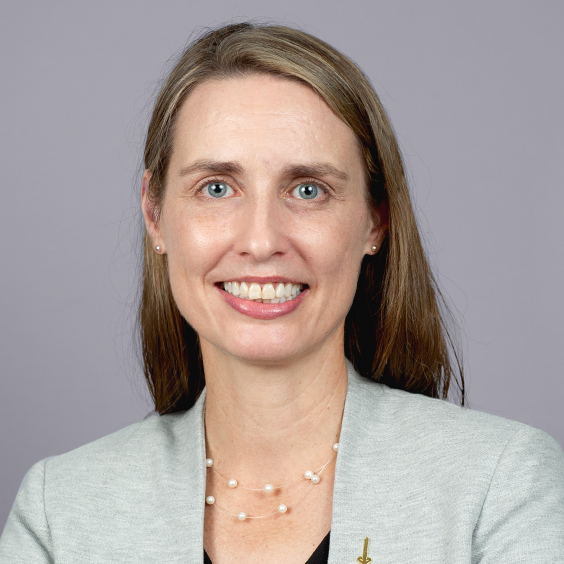
Senior Vice President, Prevention & Early Detection
American Cancer Society

President & CEO
National Alliance for Caregiving
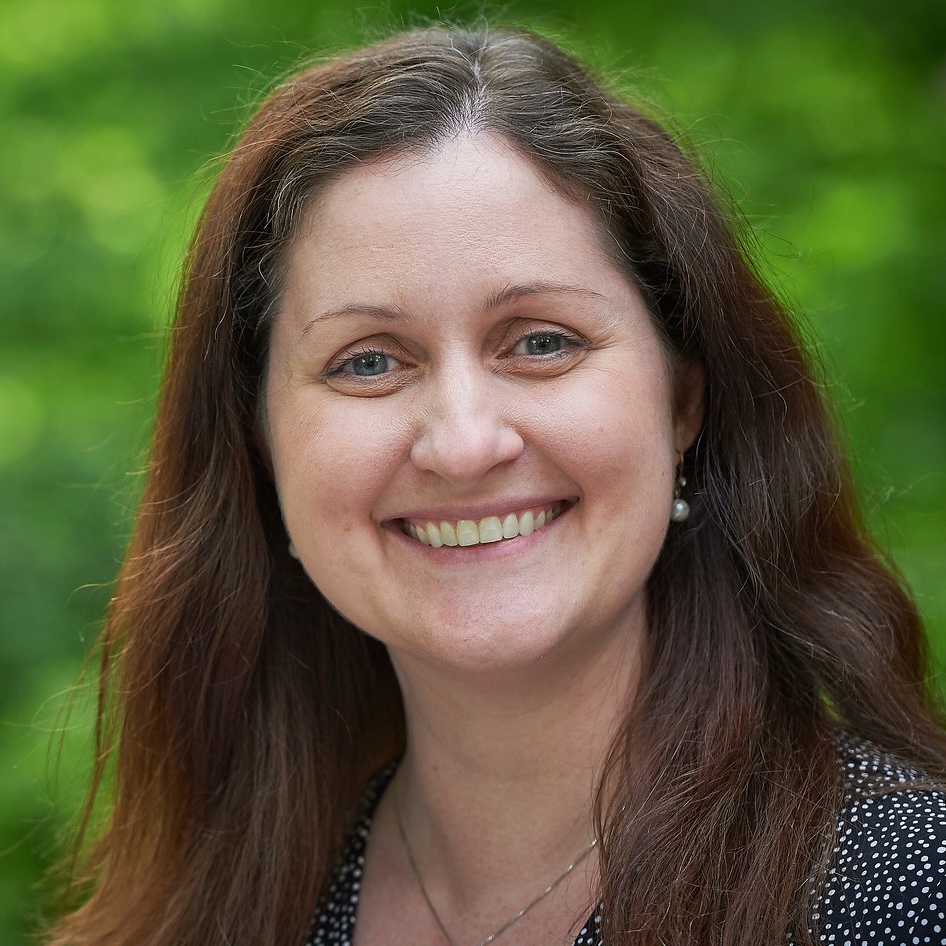
Vice President, Research and Insights
CancerCare
Steering Committee Organizations
The Steering Committee is responsible for driving consensus and informing the key focus areas and efforts of the Collaborative.

Advisory Board Members
Aminah Abdullah
University of Illinois Cancer Center
Anneliese Barron
One Family Foundation *
Charlotte Bayala
The Cancer Caregiver Podcast
Emma Berry
Exelixis *
Laura Blessing, PhD
Georgetown University
Cathy Ferrone
Kite, a Gilead Company *
Tamryn Fowler Gray, PhD, RN, MSN, MPH
Dana-Farber Cancer Institute
Jasmine Greenmyer, MPH
Bristol Myers Squibb *
Edem Hado, MPH
AARP
Sharon Hamill, PhD
Shiley Haynes Institute for Palliative Care, CSU *
Theresa A. Hastert, PhD, MPP
Wayne State University, Karmanos Cancer Institute
Ryan Hohman
Friends of Cancer Research
Randy A. Jones, PhD, RN, FADLN, FAAN
University of Virginia
Bellinda King-Kallimanis, PhD
LUNGevity *
Youngmee Kim, PhD
University of Miami
Parvathy Krishnan
Krishnan Family Foundation
Michael J. LaMonte, PhD, MPH
University at Buffalo – SUNY
Kristin Litzelman, PhD
University of Wisconsin-Madison
Diane Mariani, LCSW, CADC
Rush University Medical Center
Hazel Moran
EMD Serono *
Shelley Fuld Nasso, MPP
National Coalition for Cancer Survivorship
Chandylen Nightingale, PhD, MPH
Wake Forest University School of Medicine
J. Nicholas Odom, PhD, RN, ACHPN, FPCN, FAAN
University of Alabama at Birmingham
Meagan O’Neill, MS
Association of Cancer Care Centers *
Sherri May-Rogers
Pfizer *
Candice Roth, MSN, RN, CENP
Academy of Oncology Nurse & Patient Navigators *
Kristen Santiago, MS
Caregiver Advocate
Daneen Sekoni
Cancer Support Community *
Alison Silberman
Stupid Cancer
Allison Silvers, MBA
Center to Advance Palliative Care *
Caroline Sloan, MD, MPH
Duke University School of Medicine
Brian Smith
Merck *
Rachel Solomon
Sanofi *
Nicole Stout, DPT, CLT-LANA, FAPTA
American Cancer Society *
Ranak Trivedi, PhD, FGSA, FSBM
Stanford University; VA Palo Alto
Ben Tweeten, MSW, LICSW
NMDP
Madhavi Vemireddy, MD
Cleo
* Denotes organizational members of the steering committee
Funders
Thank you to the funders whose support allows us the opportunity to improve the lives of cancer family caregivers.




Collaborative News
New Brief Highlights How Medicare Can Strengthen Support for Family Caregivers
As more families step into caregiving roles for loved ones with serious and complex conditions like cancer, a new report from the National Alliance for Caregiving’s Cancer Caregiving Collaborative explores how Medicare billing codes can help provide stronger support...
New Brief Highlights How Medicare Can Strengthen Support for Family Caregivers
As more families step into caregiving roles for loved ones with serious and complex conditions like cancer, a new report from the National Alliance for Caregiving’s Cancer Caregiving Collaborative explores how Medicare billing codes can help provide stronger support through direct training for family caregivers.
The brief, “Trends in Innovation: Implementing and Refining Caregiving Training Services in Medicare,” focuses on Caregiver Training Services (CTS) codes first introduced by the Centers for Medicare & Medicaid Services (CMS) 2024 Physician Fee Schedule. These codes allow healthcare providers to receive reimbursement for time spent training family caregivers in essential skills like wound care, medication management, and feeding support.
Drawing on case studies from Northwell Health and RUSH University Medical Center, the report shares real-world examples of how health systems are implementing CTS codes. It also includes practical tools such as workflows and integration checklists, and recommendations for health systems and providers exploring caregiver training as part of care delivery.
The brief is available in full and in three standalone formats:
- Full Brief
- Part 1: Report Only
- Part 2: Background, Case Studies, and CTS Checklist & Workflow
- Part 3: CTS Implementation Checklist Only
Together, these insights show how healthcare systems can better prepare and recognize family caregivers as core members of the care team. As more care is delivered at home, training and supporting caregivers is an essential step toward improving health outcomes and quality of life for patients and their families.
Connect With Us
If you or your organization are interested in learning more about the Cancer Caregiving Collaborative, becoming a member of the Steering Committee, or signing up for our bimonthly newsletter, please email us at cancercarecollab@caregiving.org or fill out the form below.